
Black Business Growth Matters: 5 Steps to Build a Local Support Network Through Your Church
Black Business Growth Matters: 5 Steps to Build a Local Support Network Through Your Church
![[HERO] A group of church leaders and Black business owners collaborating in a local business hub, part of a church-led community development program.](https://cdn.marblism.com/4KNcyhf8Ne9.webp "[HERO] A group of church leaders and Black business owners collaborating in a local business hub, part of a church-led community development program.")
Let’s be honest: Sunday morning is the most segregated hour in America, but it’s also the most powerful. For decades, the Black church has been the heartbeat of the community. It’s where we go for spiritual refueling, but it’s also where the real work of community building happens. If we want to see our neighborhoods thrive, we have to talk about the money. Specifically, how we can use the church as an engine for Black business growth.
It isn’t just about feeling good or being "charitable." It’s about building a closed-loop economy. We’re talking about keeping a dollar in the neighborhood long enough for it to actually do some good. When we support local entrepreneurs, we aren't just buying a product; we are investing in a dream that keeps the lights on for a family down the street.
At Globalliance Strategic Communities, we believe that faith-based community development shouldn't be a guessing game. It’s time to move beyond the occasional bake sale and start thinking about systemic economic change. Here is how your church can become a powerhouse for local Black business growth using five simple, research-backed steps.
1. Economic Evangelism (The Power of Patronage)
We talk a lot about "soul winning," but what about "sole winning"? As in, winning over the hearts and wallets of our congregation to support local business owners. Economic evangelism is the practice of making intentional patronage a part of your spiritual walk. It’s about teaching the congregation that where they spend their money is a moral choice.
When a church makes it a point to highlight a "Business of the Month," it does more than just give a shout-out. it creates a culture of intentionality. This is the first step in "circling the Black dollar." If every member of a 500-person congregation spent just $20 a week at a local Black-owned business, that’s over $500,000 injected back into the local economy every year.

This kind of church community impact is measurable and immediate. You don’t need a massive grant to start this. You just need a pulpit and a passion for seeing your neighbors succeed. By making patronage a regular part of the conversation, you shift the mindset from "consumer" to "community builder."
2. Conduct an Asset Audit (Your Building is a Goldmine)
Take a look around your church building on a Tuesday morning. It’s probably empty, right? That’s a wasted asset. One of the most practical steps in faith-based community development is performing an asset audit. Your sanctuary might be for Sundays, but your fellowship hall, commercial kitchen, and classrooms can be for small business growth all week long.
Could your church basement become a co-working hub for local freelancers? Could your licensed commercial kitchen be used as a commissary for a startup catering company or a baker? By offering these spaces at a low cost: or even free for a limited time: you remove the biggest barrier to entry for new entrepreneurs: overhead costs.

Think of your church as an incubator. When you use your physical space to host "hubs," you aren't just being a good neighbor; you are providing the infrastructure for a closed-loop economy. This is a core part of the square mile community model, where we focus on maximizing the resources within a literal one-mile radius of the church.
3. Networking and Mentorship (The Pew-to-Storefront Connection)
Your congregation is already full of experts. You’ve got retired accountants, marketing pros, lawyers, and veteran business owners sitting in the pews every single week. The problem is, they usually don't know who needs their help. Bridging the gap between the "old heads" and the "young hustlers" is where the magic happens.
Setting up a formal mentorship program through your church outreach programs can change the trajectory of a struggling business. Imagine a young entrepreneur trying to open a coffee shop being mentored by a deacon who spent thirty years in commercial real estate. That kind of knowledge transfer is priceless.
Networking shouldn't be boring, either. Host "Business Bazaars" or "Pitch Nights" where local owners can showcase their work. It builds social capital, which is often just as important as financial capital. When people know each other, they trust each other. And when they trust each other, they do business together.
4. Digital Resource Directories (Circling the Black Dollar)
How can people buy Black if they don’t know what’s available? You need a central place where the community can find reliable local businesses. A paper flyer stuck to a bulletin board isn't going to cut it in 2026. You need a digital Resource Directory that people can access from their phones.
This is where Globalliance Strategic Communities really shines. Our platform allows you to create a searchable, professional business directory that your congregation can use daily. You can categorize businesses, include photos, and even add "verified" badges for businesses that are part of your church network.

Using digital tools for community impact measurement helps you see exactly how many people are looking for local services. When you have a directory, you aren't just guessing who is out there; you are mapping your local economy. This transparency makes it much easier to encourage "circling the Black dollar" because you’ve removed the "I didn't know" excuse.
5. Educational Workshops and Access to Capital
We have to address the elephant in the room: access to capital. For far too long, Black entrepreneurs have been shut out of traditional banking systems. While the church might not be able to hand out million-dollar loans, it can certainly provide the education needed to navigate the financial world.
Host workshops on how to write a business plan, how to clean up credit, or how to apply for micro-grants. Bring in local bankers who actually want to invest in the community. Sometimes, a business owner just needs someone to show them how to set up their LLC or manage their taxes.
By providing these educational resources, you are empowering the community with the "literacy of leverage." This is a key part of Globalliance Strategic Communities: creating a network that provides both the fish and the fishing lesson. When owners have the tools they need to be "bankable," the entire community rises.
The Square Mile Model: Why Local Matters
All of this works best when we focus on the square mile community model. The idea is simple: if we focus our energy and our spending within the one-mile radius surrounding our church, we create a concentrated area of prosperity. Instead of spreading our resources too thin across the whole city, we build a stronghold of economic health right where we live.
This closed-loop economy ensures that money doesn't just pass through our hands on its way to a corporate headquarters in another state. It stays local. It pays for the little league uniforms, it fixes the local park, and it hires the kid from down the block.
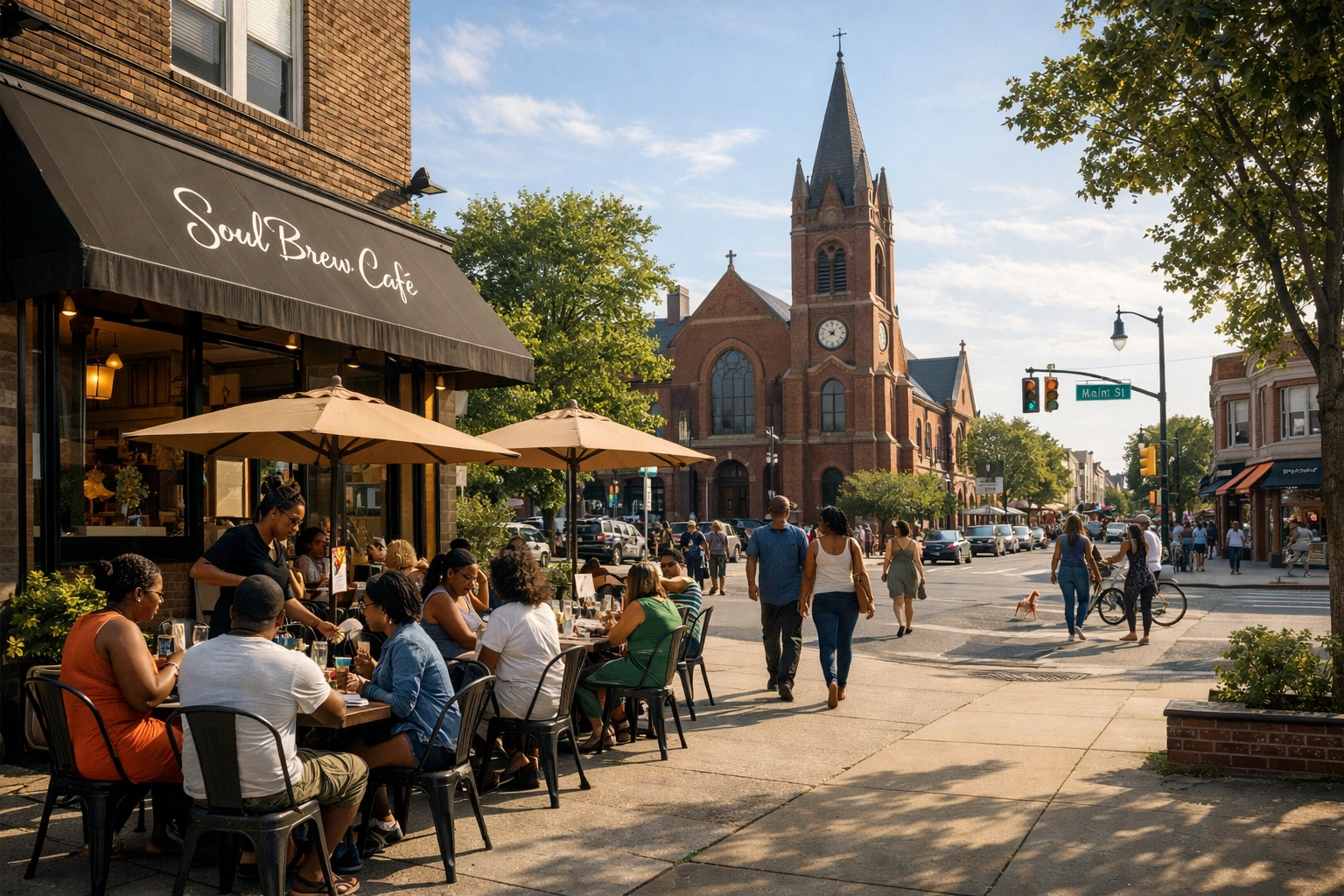
Measuring this impact is crucial. You want to be able to say, "Because of our church’s initiative, three new businesses opened in our square mile this year." That’s the kind of church community impact that gets people excited and keeps the momentum going.
How The Globalliance Strategic Communities Makes It Easy
We get it. You’re a leader, not a tech wizard. You have enough on your plate without trying to manage a complicated database. That’s why The Globalliance Strategic Communities built tools specifically for organizations like yours. Our platform offers CRM features that help you keep track of your business owners, directory features to showcase them, and automation to keep everyone informed.
You can set up automated emails to remind the congregation about the "Business of the Week," or use our data tools to track how many people are engaging with your local business directory. We take the heavy lifting out of the tech side so you can focus on the heart work: building your community.
Final Thoughts: Start Small, Think Big
You don't have to launch all five steps this Sunday. Start with one. Maybe it's a "Business of the Month" shout-out. Maybe it's a simple directory. The key is to start. Black business growth matters because our communities matter. When we use the church as a bridge to economic empowerment, we aren't just changing bank accounts; we are changing lives.
Ready to see how digital tools can supercharge your church's community impact? Let’s talk. At Globalliance Strategic Communities, we’re here to help you build that square mile, one business at a time. Keep it simple, keep it local, and keep the faith. The growth will follow.
