5 Steps How to Build a "Model Black Community" (Easy Guide for Faith Leaders)
5 Steps How to Build a "Model Black Community" (Easy Guide for Faith Leaders)

Let’s be honest for a second. If you’re a faith leader, you already know that the church is the heartbeat of our neighborhoods. For generations, the Black church has been the place for spiritual renewal, social justice, and even a little bit of Sunday afternoon gossip. But here’s the million-dollar question: Can the church also be the engine for a self-sustaining, thriving economy?
At Globalliance Strategic Communities, we believe the answer is a resounding "Yes." We aren't just talking about a food pantry or a clothes drive once a month. We’re talking about building a "Model Black Community" where the church leads the way in economic restoration.
Through Globalliance Strategic Communities, we are helping leaders like you move from survival mode to mastery. If you’re ready to stop waiting for outside help and start building from within, here is your five-step blueprint for faith-based community development.
Step 1: Master the Square Mile Community Model
Most of us have big dreams. We want to change the city, the state, or the world. But when you try to change everything at once, you often end up changing nothing. The secret to real Black community economic development is what we call the square mile community model.
Think about the area immediately surrounding your church. Who lives there? What businesses are operating on the corners? Which houses are boarded up? The Square Mile Model is about radical focus. Instead of spreading your resources thin across the whole city, you pour your energy into the blocks you can actually walk.
When a church focuses on its immediate square mile, it becomes a visible beacon of change. You start to notice the small wins: a cleaned-up lot here, a new signage for a local shop there. This hyper-local focus makes the work manageable and the results undeniable. You aren't just a building in the neighborhood; you are the architect of the neighborhood.

Step 2: Use Asset-Based Community Development
We’ve all been conditioned to look at our communities and see what’s missing. We see the lack of grocery stores, the lack of funding, and the lack of jobs. But faith-based community development works best when we flip the script. Instead of looking at what we don't have, we start auditing what we do have.
This is called Asset-Based Community Development (ABCD). Your church is likely sitting on a goldmine of untapped resources. Think about it:
Physical Space: Is your fellowship hall sitting empty Tuesday through Thursday? That’s a co-working space or a small business incubator waiting to happen.
Human Capital: Who is in your pews? You have retired accountants, active marketing pros, construction workers, and teachers. These are the mentors and consultants for the next generation of Black entrepreneurs.
Trust: In a world where people are skeptical of everything, the church still holds the "trust equity" of the community.
Before you ask for a grant, take an inventory of your assets. When you realize the wealth of knowledge and space you already control, you stop being a beggar and start being a builder.
Step 3: Create a Closed-Loop Economy
Have you ever heard the statistic about how long a dollar stays in the Black community? It’s usually measured in hours, not days. If we want to build a "Model Black Community," we have to practice the "Closed-Loop Economy." This means keeping our money circulating within our own ecosystem for as long as possible.
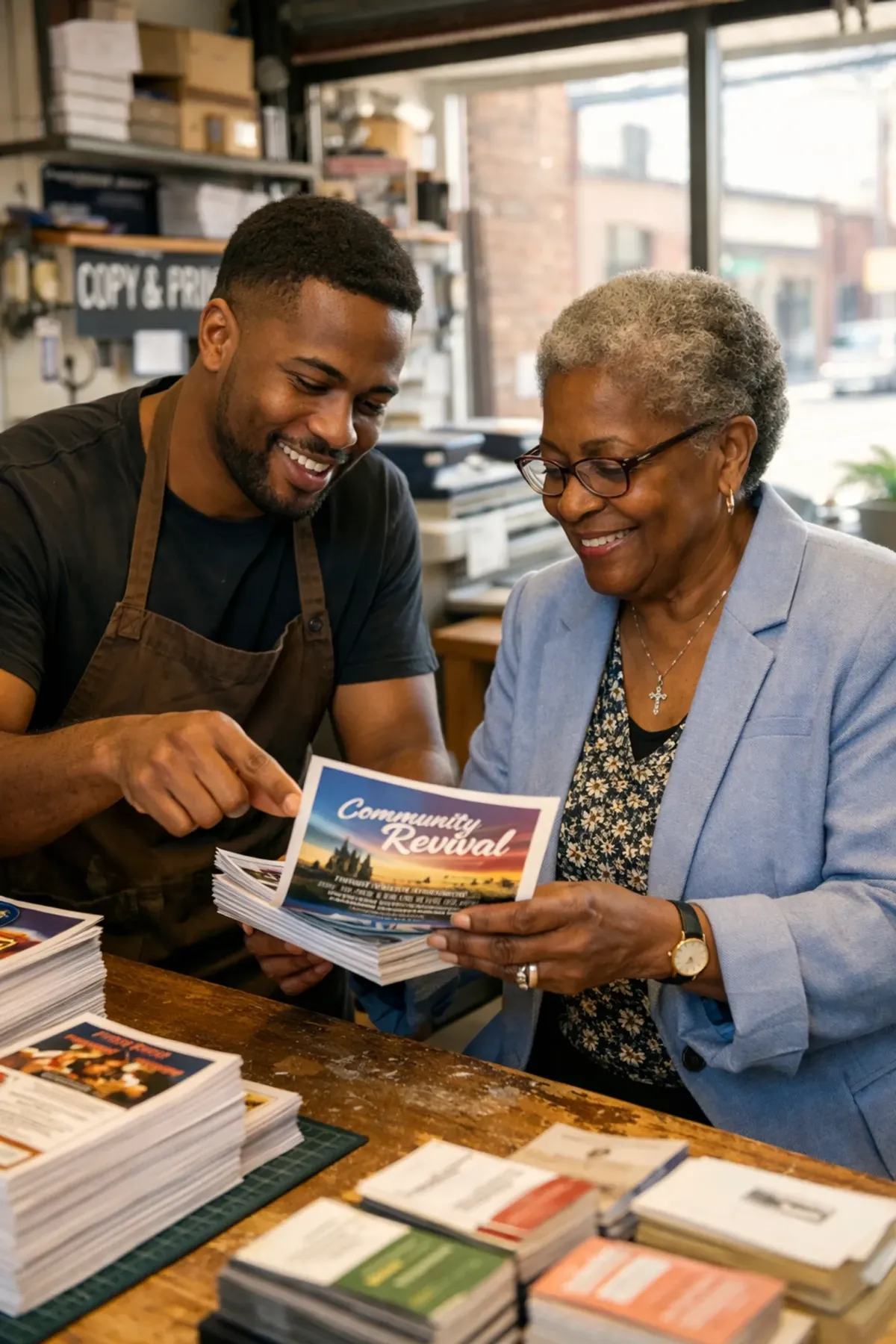
This isn't about being exclusive; it’s about being intentional. If the church needs printing done, it should go to a local Black-owned shop in that square mile. If a member needs a plumber, the church directory should point them to a brother or sister in the congregation first.
When we "Circle the Black Dollar," we create a multiplier effect. One dollar spent at a local bakery helps that owner hire a local youth, who then spends their paycheck at the local barber. This is the foundation of church-led community development. We stop the "leakage" of wealth and start building a reservoir of resources that stays right where it belongs.

Step 4: Forge Kingdom Partnerships with GSC
You don’t have to do this alone. In fact, you shouldn't. The vision of Globalliance Strategic Communities (GSC) is to connect faith leaders with the tools, networks, and strategies needed to make this "Model Black Community" a reality through practical church-led community development.
Kingdom Partnerships are about breaking down the silos. Too often, the church on one corner doesn't know what the church on the next corner is doing. We’re all fighting the same battles, so why not share the same playbook?
Through GSC, we provide the framework for collaboration. We help you connect with local business owners, civic leaders, and other faith organizations who are committed to the same Square Mile goals. When we align our vision, we don't just have a few successful programs; we have a movement that can’t be ignored.
Step 5: Leverage Digital Empowerment
Now, let’s talk about the "how." You can have the best vision in the world, but if you’re still managing your outreach on a yellow legal pad or a messy spreadsheet, you’re going to hit a ceiling. This is where Globalliance Strategic Communities comes in.
To build a modern community, you need modern tools. Digital empowerment is about using technology to automate your neighborhood outreach and manage your relationships effectively. Our all-in-one platform provides:
CRM (Customer Relationship Management): Keep track of every business owner, neighbor, and volunteer in your square mile.
Automation: Send out updates, event invites, and encouragement to your community without spending eight hours at a computer.
Neighborhood Outreach Tools: Use data to see where the needs are greatest and where your assets can make the most impact.
Technology shouldn't be scary; it should be an accelerator. By using digital tools, you can scale your efforts and ensure that no one in your square mile falls through the cracks. It turns your church from a weekend gathering into a 24/7 community hub.

Bringing the Blueprint to Life
Building a "Model Black Community" isn't a pipe dream. It’s a deliberate process of reclaiming our influence and our economics. It starts with a radical focus on your immediate surroundings, an honest look at your current assets, and a commitment to keeping your resources local through faith-based community development and Black community economic development.
When you combine that with strong partnerships and the right digital tools, you aren't just running a church anymore. You are leading a revolution of restoration.
If you’re ready to take the first step toward transforming your square mile, we’re here to help. Let’s stop talking about what could be and start building what should be. The blueprint is ready: all we need is your leadership.
