How to Integrate Local Business Growth with Your Church Outreach Strategy
How to Integrate Local Business Growth with Your Church Outreach Strategy
![[HERO] A visual representation of church leaders and local business owners collaborating to build a thriving community.](https://cdn.marblism.com/ClXUJlI_hoY.webp "[HERO] A visual representation of church leaders and local business owners collaborating to build a thriving community.")
For a long time, the standard model for church outreach has looked a lot like a one-way street. We identify a need, we gather resources, and we provide a temporary fix. Whether it’s a food pantry, a clothing drive, or a holiday toy giveaway, these acts of kindness are vital. They meet immediate needs and show the love of the community in a tangible way.
But there is a growing conversation in our circles about something deeper. We are starting to ask: "How do we move from relief to development?" If we are constantly feeding people but never helping the neighborhood build its own grocery store, are we truly solving the root problem? This is where the intersection of faith and economics becomes a powerful tool for transformation.
Integrating local business growth into your church outreach strategy isn't just about "doing business." It’s about stewardship, justice, and building a foundation where families can thrive long after the outreach event is over. In this guide, we’ll look at how to use the Square Mile model and the concept of a Closed-Loop Economy to make your church a catalyst for lasting economic change.
Moving Toward the Square Mile Model
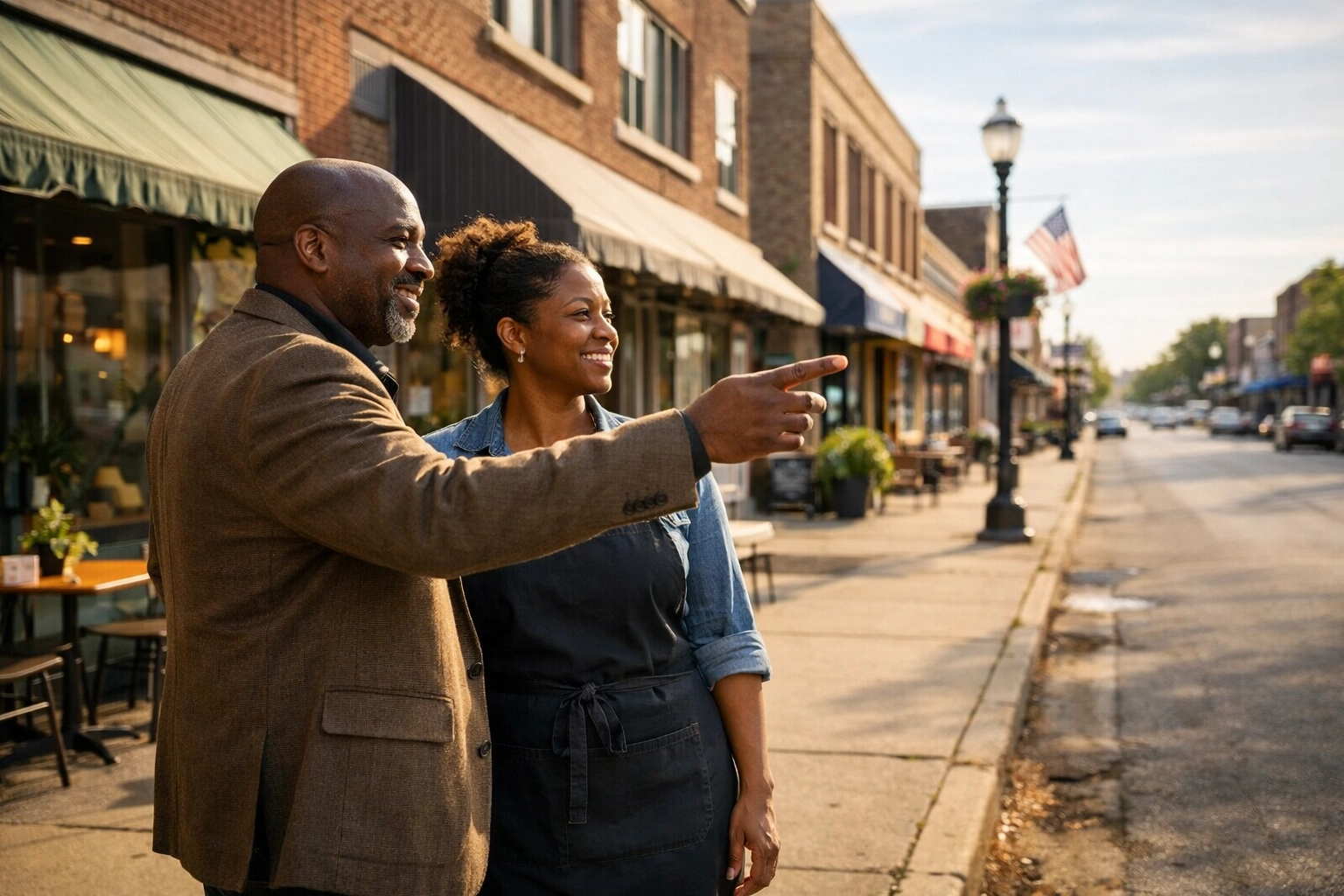
When we talk about community development, the scale often feels too big. Trying to fix an entire city or a whole state is overwhelming. That’s why we advocate for the Square Mile model. The idea is simple: focus your energy, your prayers, and your resources on a specific, geographic area, roughly one square mile, surrounding your church.
By narrowing your focus, your impact becomes visible. Instead of spreading your resources thin across a dozen zip codes, you are investing deeply in the people and businesses that are literally your neighbors. Within that square mile, you probably have dozens of Black-owned businesses that are struggling to stay afloat or looking for a way to grow.
When your church outreach strategy focuses on this square mile, you aren't just a building in the neighborhood; you are a partner in the neighborhood’s success. You start to see the business owners not as "targets for evangelism" but as "partners in community health."
The Power of the Closed-Loop Economy
To really help these businesses, we have to understand the "Closed-Loop Economy." Imagine your community’s wealth like water in a bucket. Every time someone in your neighborhood buys coffee from a massive international chain or orders supplies from a global conglomerate, a hole is poked in that bucket. The money drains out of the neighborhood and rarely comes back.
A Closed-Loop Economy is about patching those holes. It’s a strategy where the community’s money stays within the community for as long as possible. When the church buys its printing services from the local Black-owned shop down the street, and that shop owner then buys lunch from the local cafe, and the cafe owner pays their staff who live in the neighborhood, the money stays in the loop.
This cycle creates jobs, stabilizes families, and builds a tax base that improves local schools and parks. As a church, you have a unique "purchasing power" that can jumpstart this loop. Your outreach doesn't always have to be a handout; it can be a "hand-up" through intentional spending and support.
Step 1: Mapping Your Local Business Ecosystem
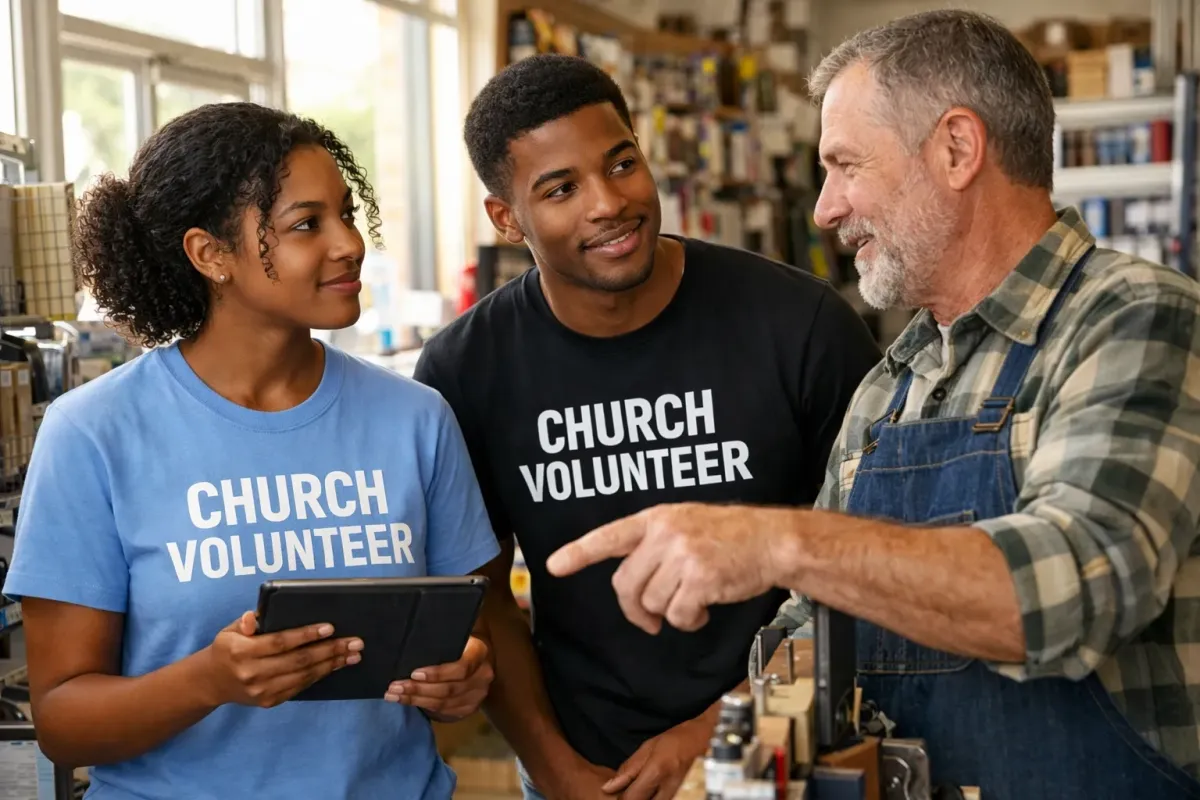
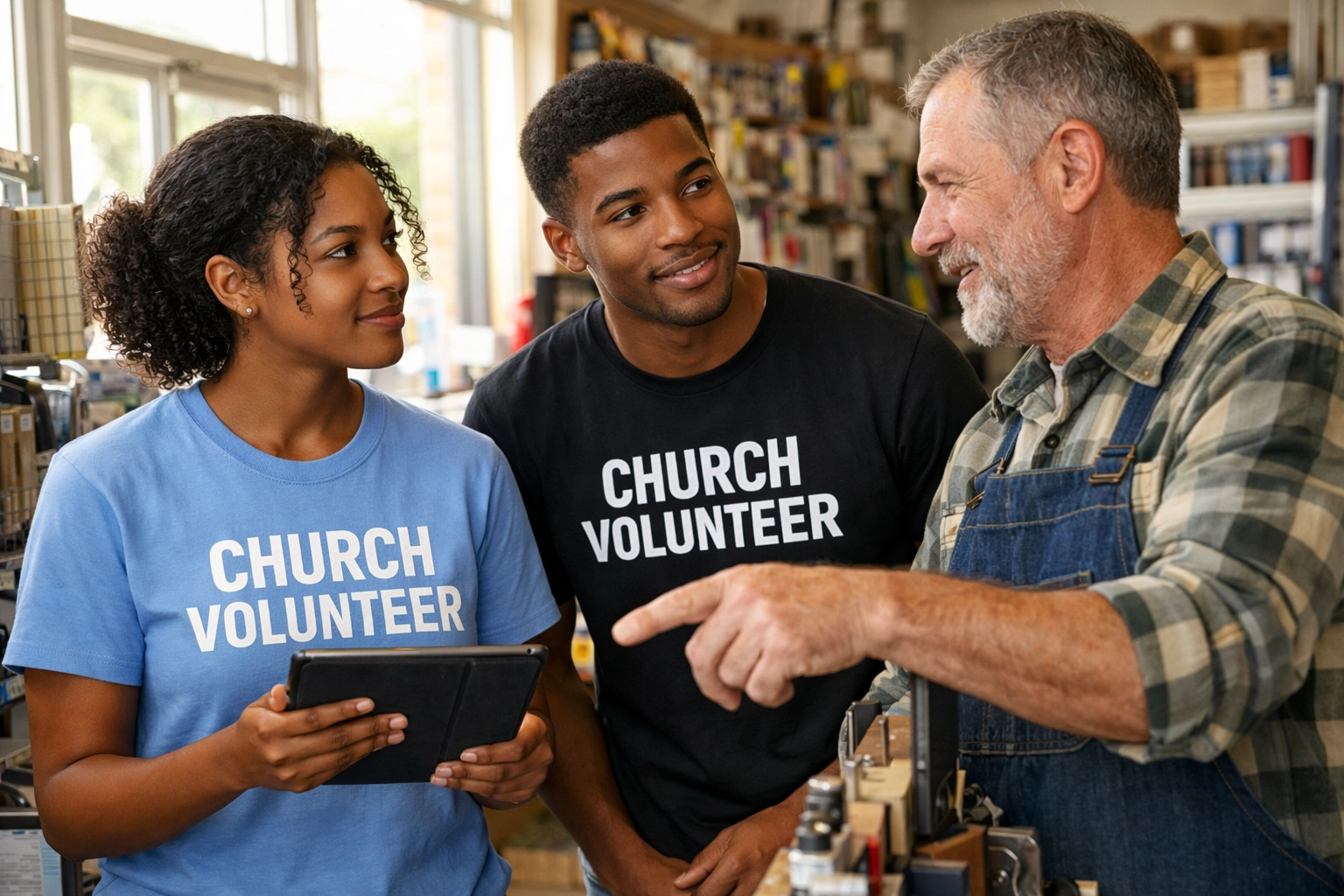
You can’t support what you don’t know. The first step in integrating business growth into your outreach is to perform a "Business Audit" of your square mile. This is a great project for your youth group or a dedicated missions team.
Walk the streets. Talk to the owners. Find out who is running the local hardware store, the catering company, the accounting firm, and the landscaping business. Focus specifically on Black-owned businesses that have historically lacked access to the same capital and networks as others.
Once you have this list, don't just put it in a drawer. This is where technology comes in. You can use a CRM (Customer Relationship Management) tool to categorize these businesses. Instead of just a list of names, you now have a database of community partners. You can track what they offer, what their needs are, and how the church has engaged with them.
Step 2: Shifting the Church’s Internal Spending
The most immediate way to support local business growth is to look at your own checkbook. Every church has operational costs. You buy paper, cleaning supplies, landscaping services, and catering for events.
Take a look at your current vendors. How many of them are located within your square mile? How many of them are Black-owned? By shifting even 20% of your annual budget toward local businesses, you are directly funding the salaries of people who live in your community.
This is outreach in its most practical form. You are using the tithes and offerings of the people to ensure that the neighborhood those people live in remains economically viable. It is a beautiful circle of stewardship.
Step 3: Using Automation to Drive Awareness
One of the biggest hurdles for local businesses is visibility. Your church likely has a significant "reach" through your email lists, social media, and weekly announcements. You can use digital tools to automate the promotion of local businesses to your congregation.
For example, you can set up a simple automation in your digital platform that highlights a "Business of the Month" in your weekly newsletter. Or, if you know a local business is having a grand opening, you can use your CRM to send a targeted text message to members who live in that specific area, encouraging them to stop by.
By automating these reminders, you make "buying local" a habit for your congregation rather than a one-time special event. You are essentially providing a free marketing department for the small businesses in your square mile.

Step 4: Tracking Impact and Accountability
In the world of SaaS and digital tools, we have a saying: "What gets measured gets improved." Traditional outreach is often hard to measure beyond "how many bags of food did we give away?" But when you integrate business growth, you can track much more significant data.
By using a digital platform to track your outreach strategy, you can see the actual impact of your efforts:
How much money has the church redirected to local vendors this year?
How many church members have reported shopping at the local businesses you’ve highlighted?
Are the businesses in your square mile seeing an increase in foot traffic or revenue?
This isn't about bragging; it’s about accountability. It allows you to see if your strategy is actually working. If a local business is still struggling despite the church's support, it may be time to offer a different kind of outreach, perhaps a business mentorship program or a workshop on digital marketing held in the church basement.
Bridging the Gap Between Sunday and Monday
The goal of this integrated strategy is to close the gap between what happens on Sunday morning and what happens on Monday morning. If we pray for our neighbors on Sunday but ignore their economic struggles on Monday, our outreach is incomplete.
When a church decides to support Black-owned businesses as a core part of its mission, it sends a powerful message. It says that we care about the whole person, their spiritual life, yes, but also their ability to provide for their children and build a legacy.
Start Small, Think Big
You don't have to overhaul your entire outreach budget overnight. Start with one category of spending. Maybe next month, you find a local Black-owned business to handle the church's lawn care. Then, the month after that, you look for a local printer for your bulletins.
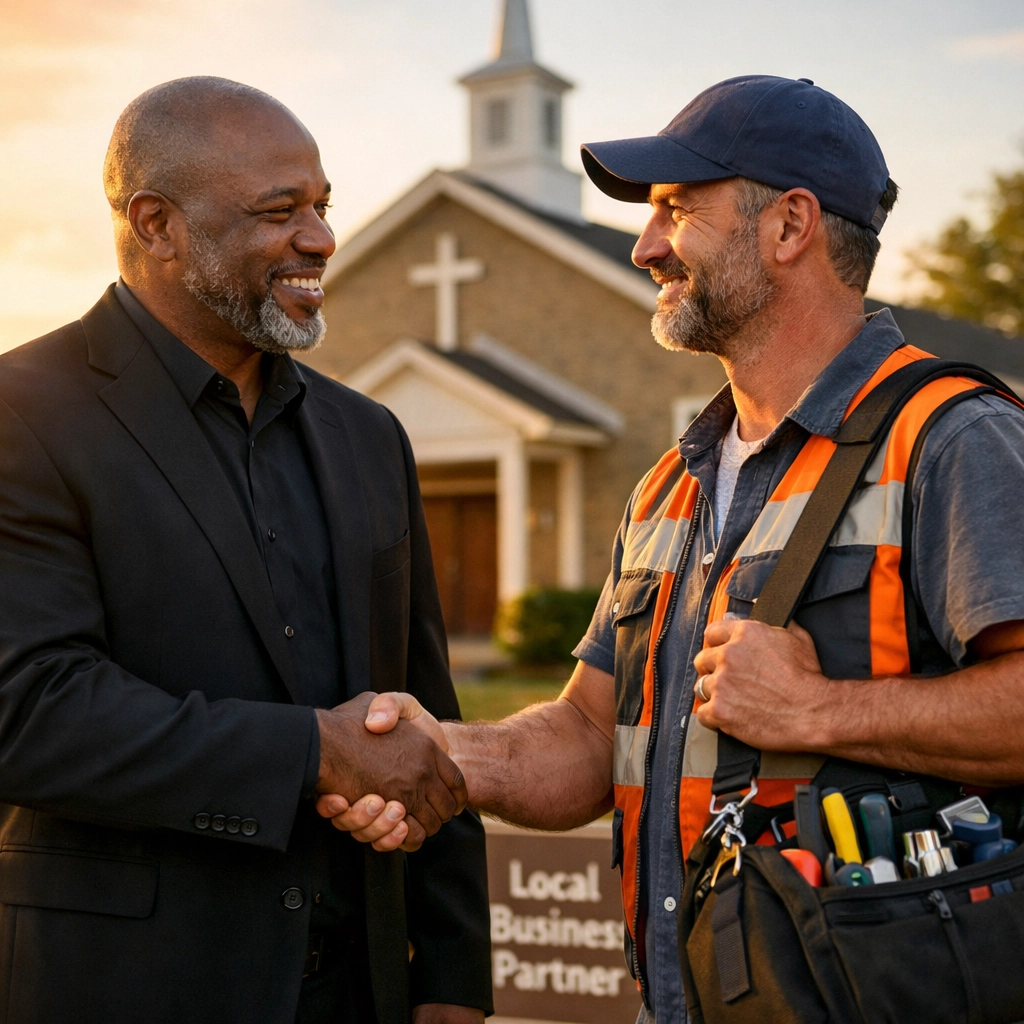
As you build these relationships, you’ll find that the "outreach" starts to go both ways. You’ll find business owners who are eager to give back to the church, to volunteer for your programs, and to support your vision. This is the heart of the Square Mile model: a community that supports itself, grows together, and leaves no one behind.
By using simple digital tools to organize, track, and automate this process, you take the "busy work" out of it and allow your team to focus on what matters most: building relationships.
If you’re ready to start mapping your community and tracking your impact, we’re here to help. Building a sustainable, closed-loop economy isn't just a dream; it’s a strategy. And it’s one that your church is uniquely positioned to lead.
