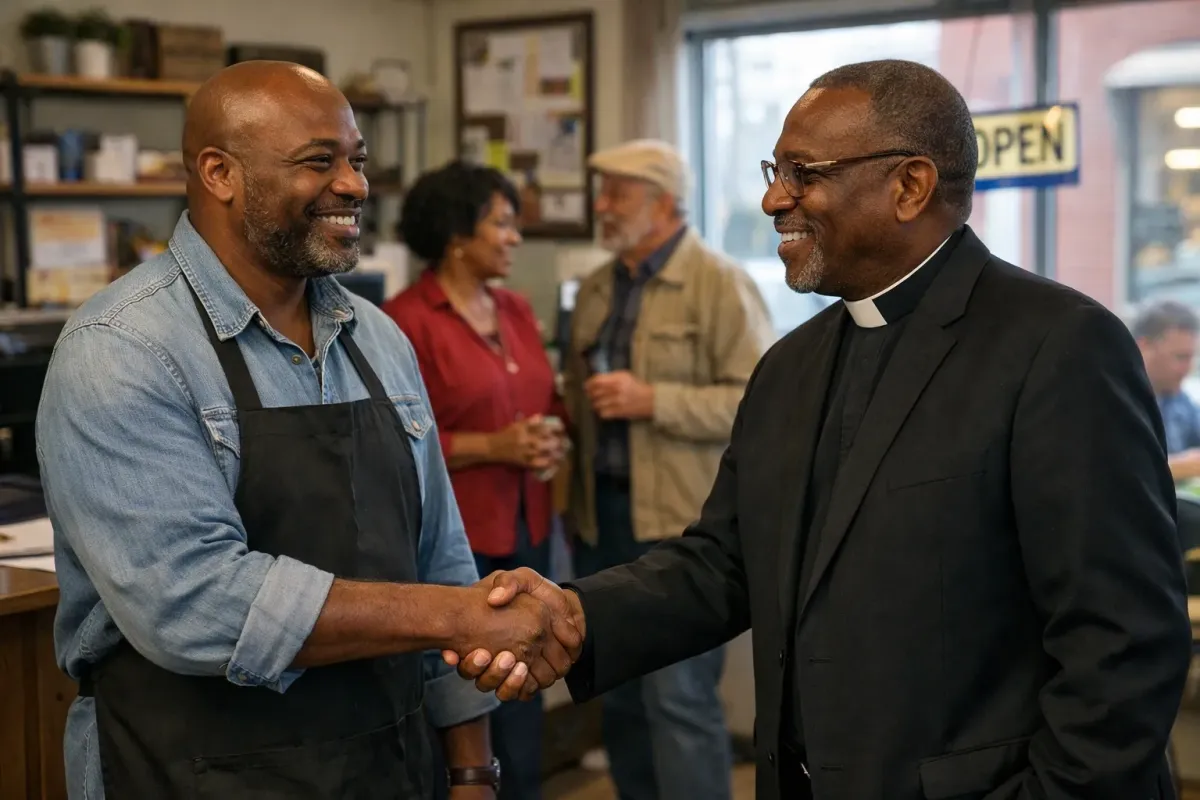
Economic Evangelism: Why the Black Church is the Key to Local Business Growth
Economic Evangelism: Why the Black Church is the Key to Local Business Growth
![[HERO] Economic Evangelism: Why the Black Church is the Key to Local Business Growth](https://cdn.marblism.com/p4vGwTalk0G.webp "[HERO] Economic Evangelism: Why the Black Church is the Key to Local Business Growth")
Let's talk about something we don't hear enough in economic development circles: the Black Church isn't just a place for Sunday worship: it's one of the most powerful economic engines sitting right in the heart of our communities.
When we talk about supporting Black-owned businesses and building generational wealth, we often overlook the infrastructure that's been there all along. Before there were chambers of commerce, business incubators, or venture capital firms in Black neighborhoods, there was the church. And today, with over 65,000 Black churches across America, we're sitting on an economic network that could change everything.
The Church Has Always Been About More Than Souls
Here's the history they don't teach in business school: the Black Church has always been in the economic empowerment business. During Reconstruction, churches were the classrooms where freed people learned to read and write. During Jim Crow, they were the meeting places where business owners networked and strategized. During the Civil Rights Movement, they were the launching pads for economic boycotts that brought entire cities to their knees.
The church didn't just save souls: it built schools, funded businesses, and created the social capital that kept communities alive when every other institution turned its back.
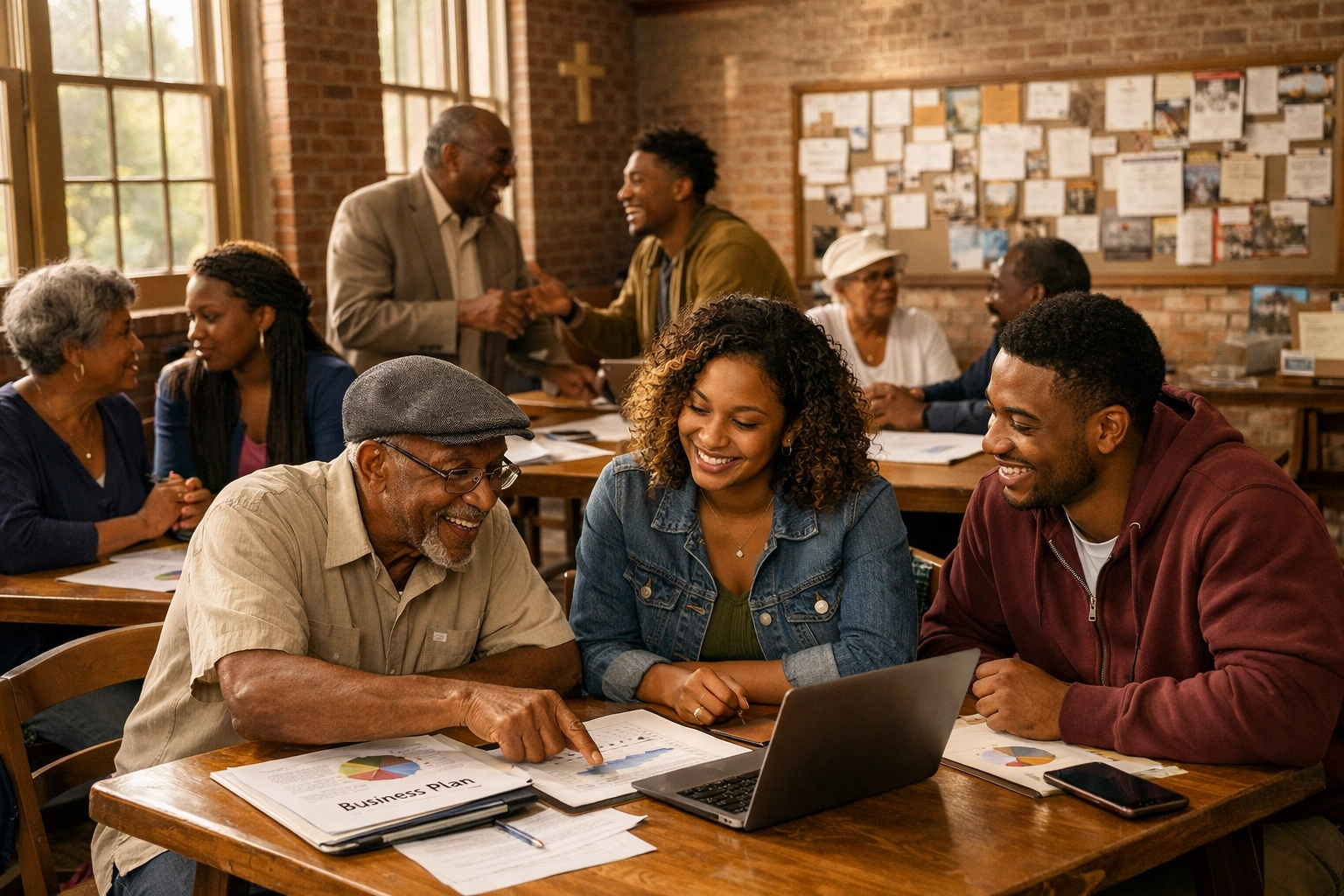
That legacy didn't disappear. It's still here, waiting to be activated in new ways for today's challenges.
The Numbers Don't Lie
Let's put this in perspective. Those 65,000 Black churches scattered across the country? That's more locations than Walmart and Target combined. Think about that for a second. We're not talking about a small network: we're talking about a massive distribution system that reaches into every neighborhood, every city, every corner where Black people live and work.
And here's what's already happening inside those walls: over 50,000 small businesses are being run by church members right now. These aren't corporations or franchises. These are the hair stylists, caterers, contractors, consultants, and home-based entrepreneurs sitting in the pews every Sunday.
The infrastructure for Black community economic development is already built. We just need to use it intentionally.
What Happens When Churches Get Intentional About Business
Let me tell you about Bust a Move Monday: or BAMM, as folks in Memphis call it. Back in 2002, New Olivet Church looked at a simple problem: Mondays are terrible for Black-owned retail businesses. So they created a solution that was pure genius in its simplicity.
They asked their congregation to support one Black-owned business every Monday. That's it. Just one business, one day a week, one month at a time.
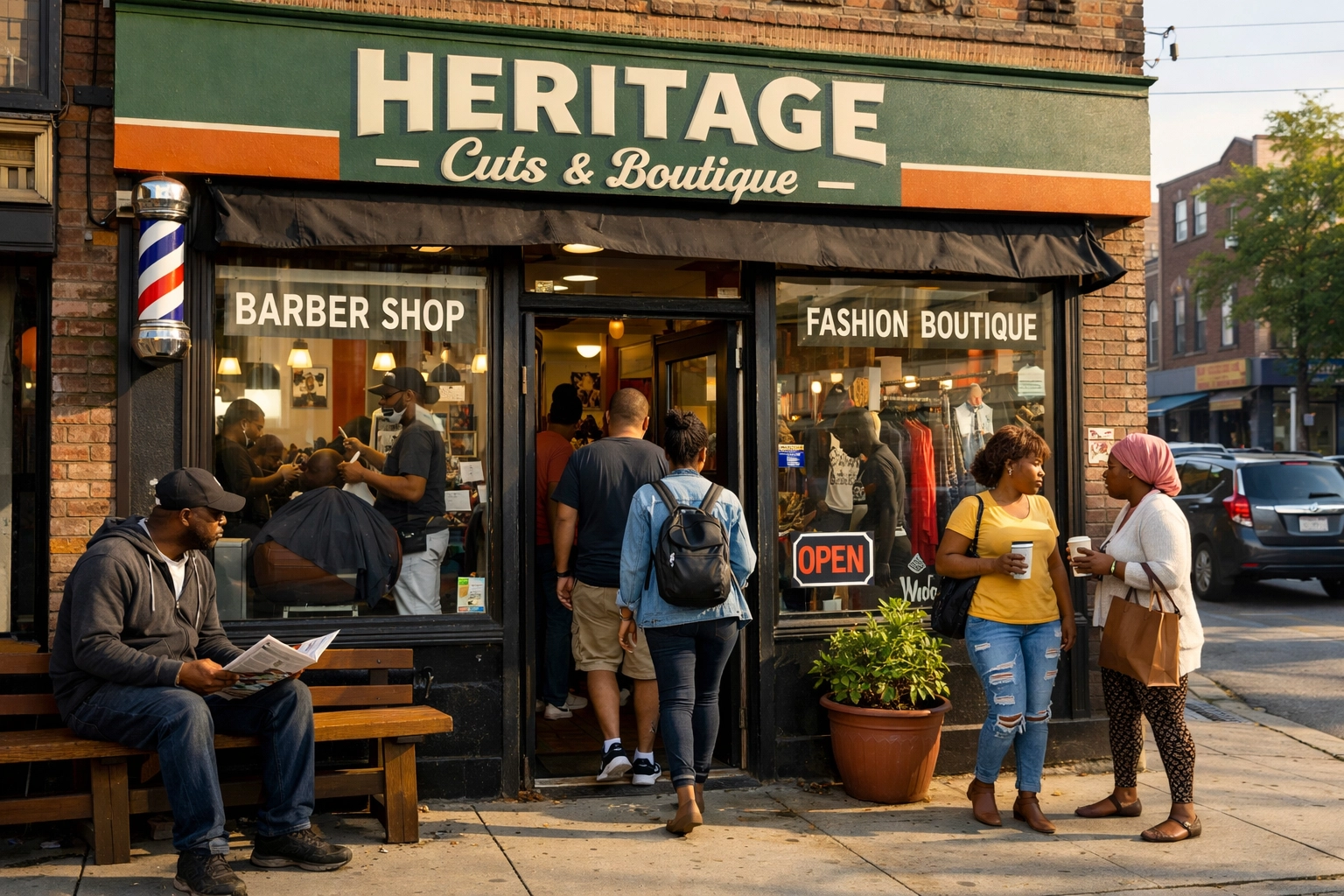
The results? Local businesses that used to dread Mondays started seeing foot traffic. Cash registers that sat quiet started ringing. And the program grew into the Black Alliance Marketing Movement, spreading the model across Memphis and beyond.
This is what faith-based economic programs look like in action: simple, sustainable, and scalable.
The Closed-Loop Economy: Keep the Dollar Circulating
Here's a stat that should make every pastor and business owner pay attention: Black-owned businesses generate $206 billion in annual revenue and support 3.56 million jobs across the country. That's real economic power.
But here's the problem: money flows out of Black communities faster than water through a sieve. Studies show that a dollar circulates in Asian communities for about 28 days, in white communities for 17 days, but in Black communities? Less than 6 hours.
That's where the closed-loop economy comes in. The concept is straightforward: when church members support Black-owned businesses, and those business owners reinvest in the community and support the church, we create a cycle that builds wealth instead of bleeding it.
The National Black Church Initiative gets this. They're working with 34,000 African American churches to organize and educate the small businesses in their congregations, offering free seminars and resources that traditional chambers of commerce often don't provide to undercapitalized entrepreneurs.
The GSC Community Model: A New Framework
The God, Self, Community (GSC) model takes this even further. It recognizes that sustainable economic growth has to be built on three pillars working together.
God represents the spiritual foundation and moral framework that guides how we do business: with integrity, service, and purpose.
Self is about individual empowerment, skill development, and the entrepreneurial mindset that turns ideas into income.
Community is the network effect: the way we leverage our collective power to create opportunities that no single person could build alone.
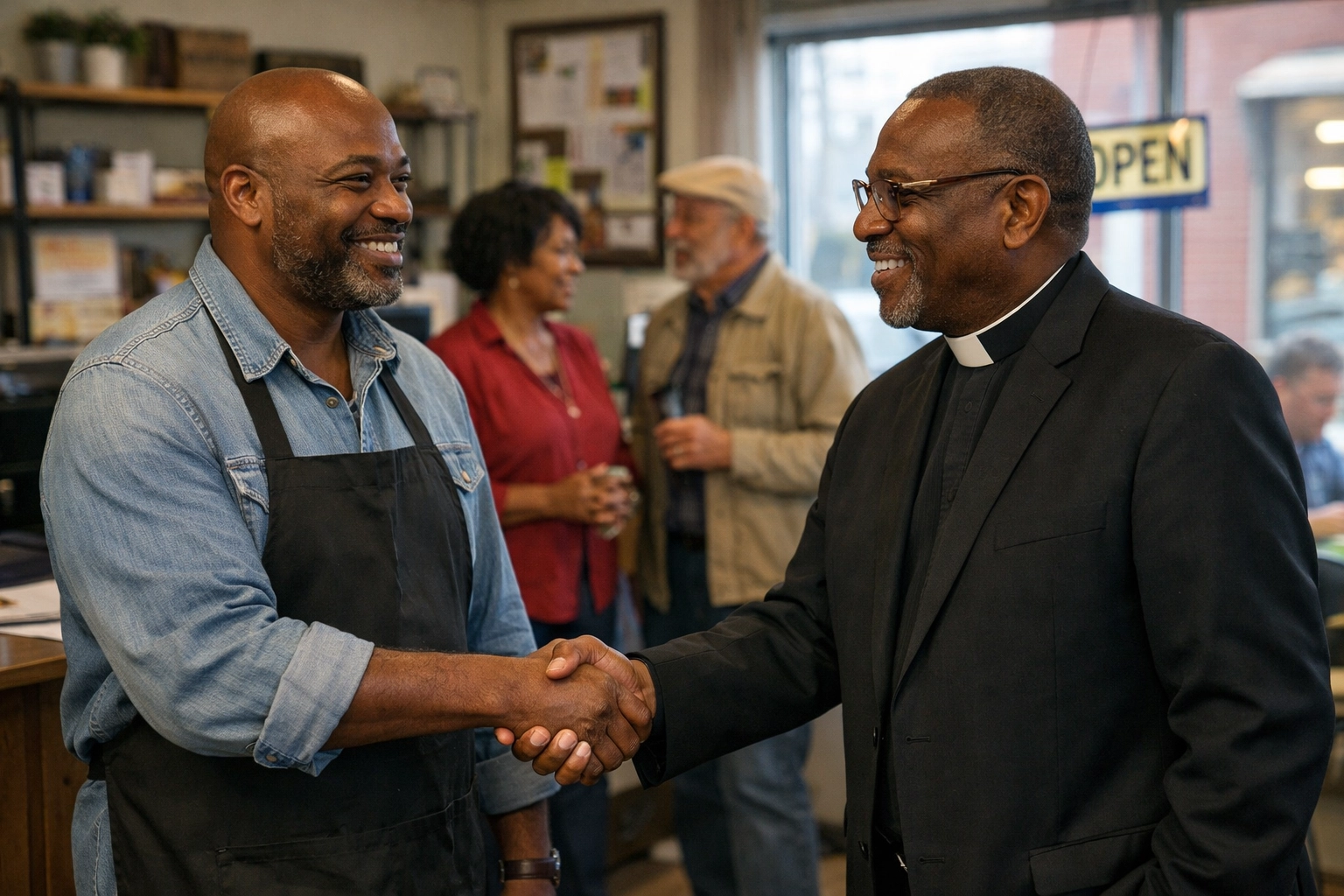
When churches embrace the GSC community model, they're not just hosting networking events. They're creating ecosystems where business formation happens naturally, where mentorship flows freely, and where church-led local development becomes the norm instead of the exception.
The Math That Changes Everything
Let's do some simple math that'll blow your mind. If every Black church in America committed to supporting just ten Black businesses each year: through purchasing, referrals, or promotion: we'd be sustaining over 650,000 Black businesses annually.
If those churches increased that to supporting 15 businesses? We're talking close to 1 million Black businesses with a reliable customer base and support network.
That kind of shift doesn't just create jobs. It builds generational wealth. It keeps money circulating in our communities. It gives our kids something to inherit beyond struggle.
Getting Practical: What This Looks Like in Real Life
So how does a church actually become an economic engine? It's simpler than you think.
Start with what you already do. Your church probably has a parking lot ministry, greeters, event coordinators, and hospitality teams. Those are customer service training grounds. You're already building the soft skills that entrepreneurs need.
Your church facility? It's potential office space, meeting rooms, and event venues for members starting businesses. Your bulletin and announcements? Free advertising for congregants' enterprises.
The church potluck where Sister Jenkins brings her famous mac and cheese? That's market research for her catering business. The Bible study where Brother Michael helps with the church website? That's his digital marketing portfolio being built.
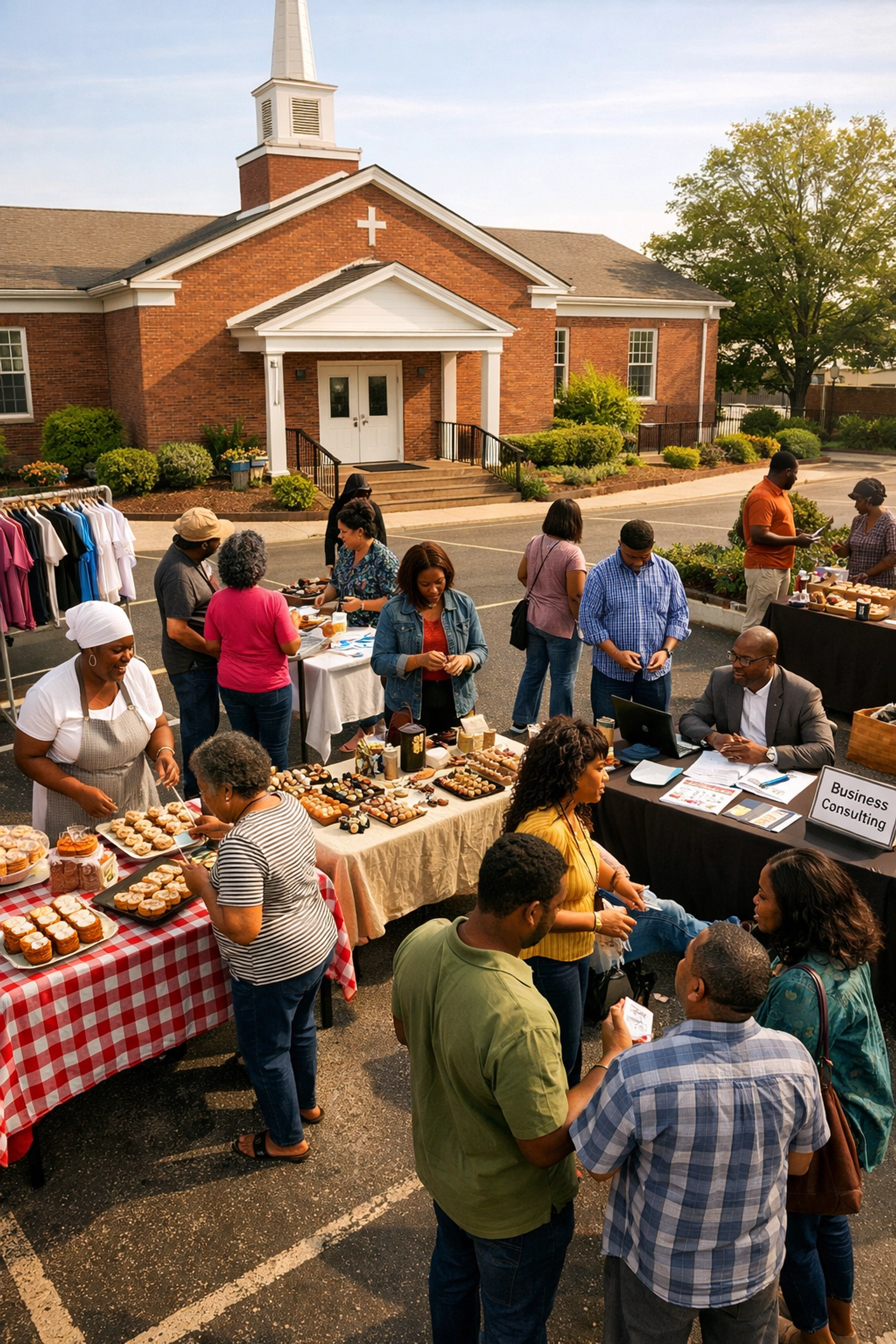
Everything the church already does can be reframed as economic empowerment if we're intentional about it.
The Ripple Effect Beyond Business
Here's what makes this model so powerful: when churches drive local business growth, they're not just creating income: they're rebuilding the entire social fabric of the community.
Young people see entrepreneurship as viable when they watch members of their church succeed. Families stabilize when income streams diversify. Neighborhoods revitalize when storefronts fill up with Black-owned businesses instead of sitting vacant or being bought out by outsiders.
The church becomes what it's always been meant to be: the heartbeat of the community, pumping economic life into every corner.
Your Move
Whether you're a pastor, a church leader, or a Black business owner, you have a role to play in this economic evangelism. It's not about turning the sanctuary into a sales pitch: it's about recognizing that caring for souls includes caring about whether folks can pay their bills.
The infrastructure is already here. The people are already gathered. The trust is already built. We just need to connect the dots intentionally.
At GSC, we're building tools that help churches and communities coordinate this kind of support at scale: making it easier to track, celebrate, and multiply the impact when faith meets economics.
The Black Church has always been the key to our survival and success. Now it's time to unlock its full economic potential. Not someday. Not when we have more resources. Right now, with what we've already got.
Because economic evangelism isn't a new gospel: it's just remembering what the church has always been called to do: set the captives free. And sometimes, those chains are economic.
