Faith & Finance: The Role of Religious Institutions in Local Economics
Faith & Finance: The Role of Religious Institutions in Local Economics
![[HERO] Faith & Finance: The Role of Religious Institutions in Local Economics](https://cdn.marblism.com/x39snEFfIiw.webp "[HERO] Faith & Finance: The Role of Religious Institutions in Local Economics")
Your church isn't just a place where people worship on Sundays. It's an economic engine sitting right in the heart of your community: whether you realize it or not.
Most church leaders think about ministry in terms of souls saved, sermons preached, and services provided. But here's what the numbers tell us: religious institutions contribute approximately $1.2 trillion annually to the U.S. economy. That's not pocket change. That's real economic power.
The question isn't whether churches impact local economies. They already do. The real question is: are you doing it intentionally?
The Hidden Economic Power of Your Congregation
Let's break down what your church already contributes to the local economy, even if you've never thought about it this way.
Congregations spend about $84 billion annually on staff salaries, building maintenance, supplies, and local services. Every time you hire a janitor, buy office supplies from the corner store, or pay the plumber to fix a leak, you're putting money into your neighborhood's economy.
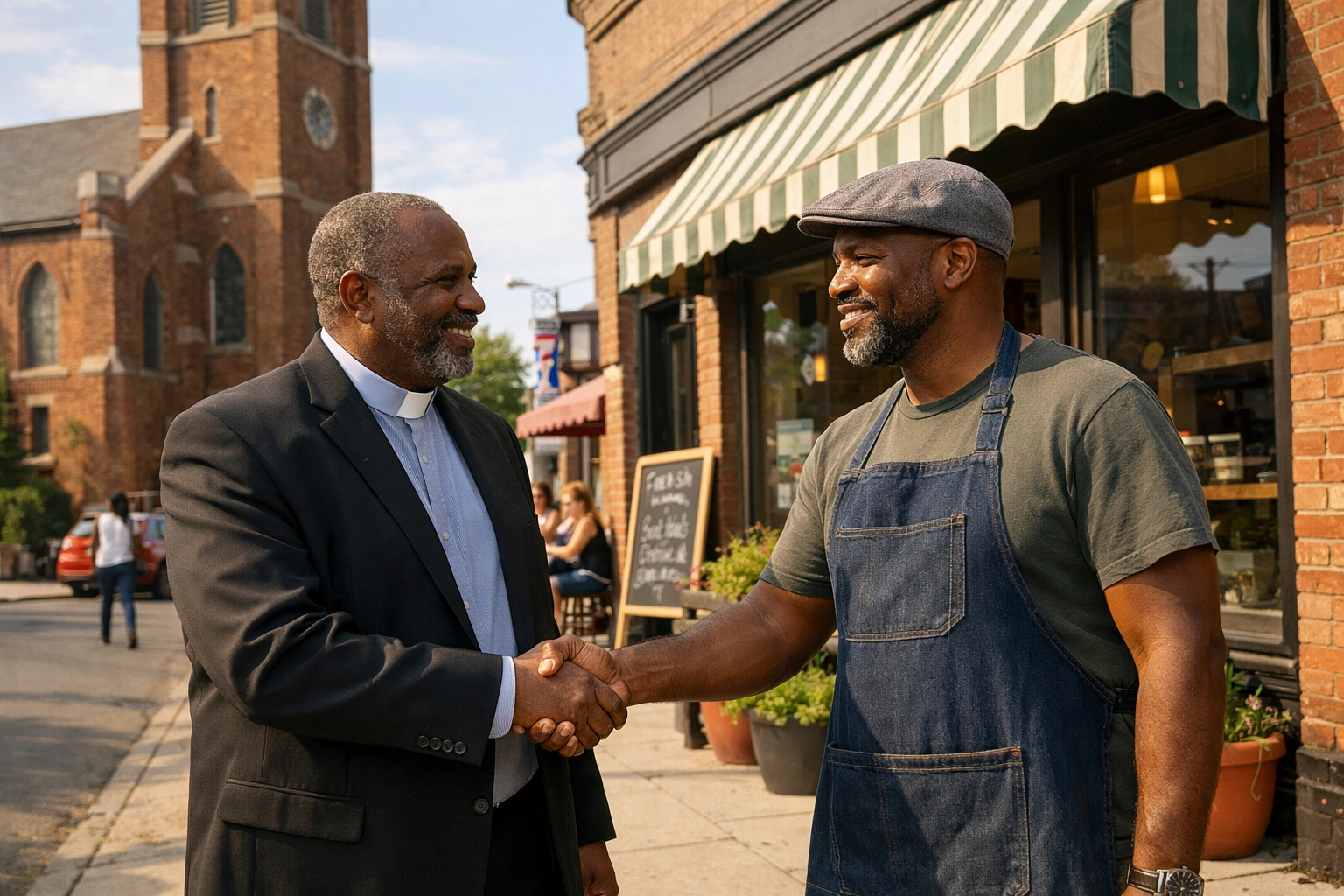
But it goes deeper than operational spending. Religious institutions provide counseling services worth $158.8 billion, educational activities valued at $91.3 billion, and direct community support totaling $83.3 billion. A 2022 study of 87 rural churches in North Carolina found that each congregation generated more than $735,000 in annual economic benefits to their local communities.
That's the difference between a struggling downtown and one that's hanging on. Between a family that makes rent this month and one that doesn't.
Why Charity Isn't Enough Anymore
Here's where most churches get stuck. You run a food pantry. You help people with rent when they're desperate. You provide clothes for job interviews. All good things. All necessary things.
But charity alone doesn't build wealth. It patches holes.
Think about it this way: if someone's boat is sinking, you don't just bail water forever. At some point, you've got to fix the leak. That's what faith based economic development does: it fixes the leak.
Traditional charity creates a cycle of dependency. You help someone today, and they're back next month with the same problem. Faith based economic development creates a cycle of sustainability. You help someone start a business, and next year they're hiring people from the neighborhood.
The shift isn't about doing less charity work. It's about building systems alongside that charity so fewer people need it over time.
How Faith-Based Economic Development Actually Works
Faith based economic development treats churches as what they really are: community anchors with assets, influence, and networks that can be leveraged for economic growth.
Your church building? That's real estate that could house a business incubator or provide affordable office space. Your congregation? That's a built-in customer base for local businesses. Your volunteer network? Those are mentors, advisors, and skilled professionals who can help entrepreneurs succeed.
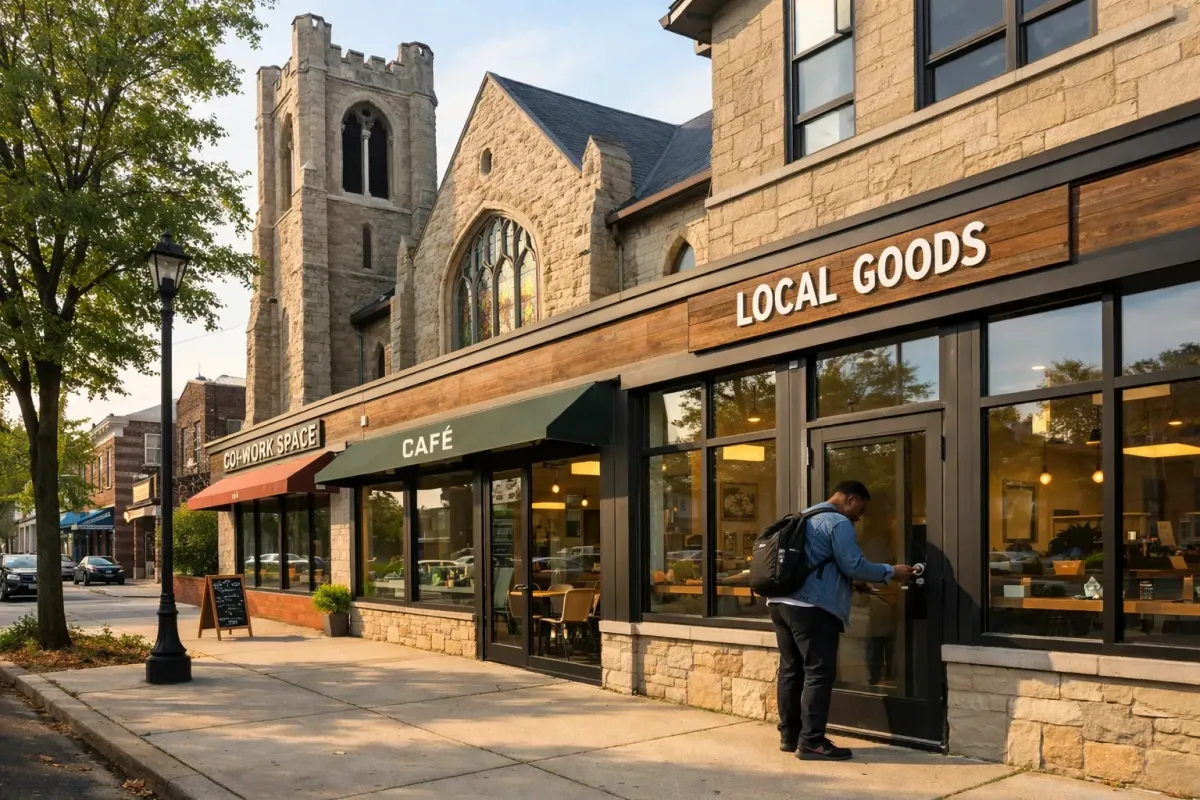
The Greater AME Allen Cathedral in Queens developed a 400-unit affordable housing facility and rehabilitated 15 storefronts for local businesses. Rose City Church in Pasadena provides affordable office space for entrepreneurs. These aren't mega-churches with unlimited budgets. They're congregations that decided to think differently about their role in the community.
Historic urban churches alone generate an average of $1.7 million in economic impact annually. That's happening whether you're intentional about it or not. The question is: what could you do if you were?
The GSC Model: From Programs to Pipelines
Here's where Globalliance Strategic Communities comes in. The GSC (Geo-Socio-Commercial) model doesn't ask churches to become something they're not. It asks them to become more strategic about what they already are.
Instead of running disconnected programs, the GSC model helps churches build connected pipelines. Instead of just serving your square mile, you start developing it.
The framework works in three layers:
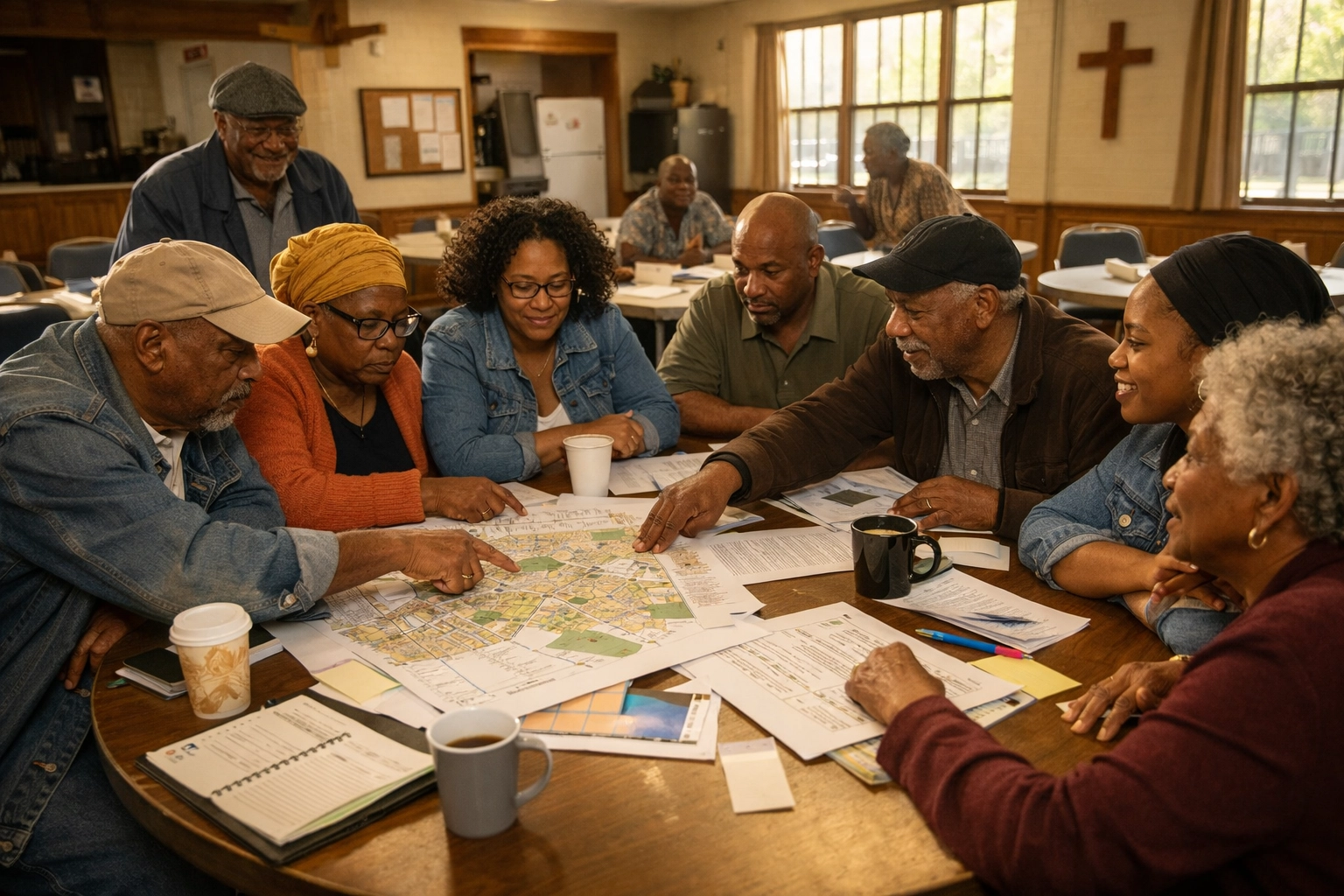
Geographic: You map your actual neighborhood: where people live, where they shop, what resources exist, and what's missing. You get specific about your square mile instead of speaking in generalities.
Social: You identify the networks, relationships, and trust that already exist in your community. Churches excel at this. You already know who needs work, who can provide jobs, who has skills, and who needs training.
Commercial: You connect local businesses with local consumers, creating a closed-loop economy where dollars circulate in the neighborhood instead of immediately leaving it.
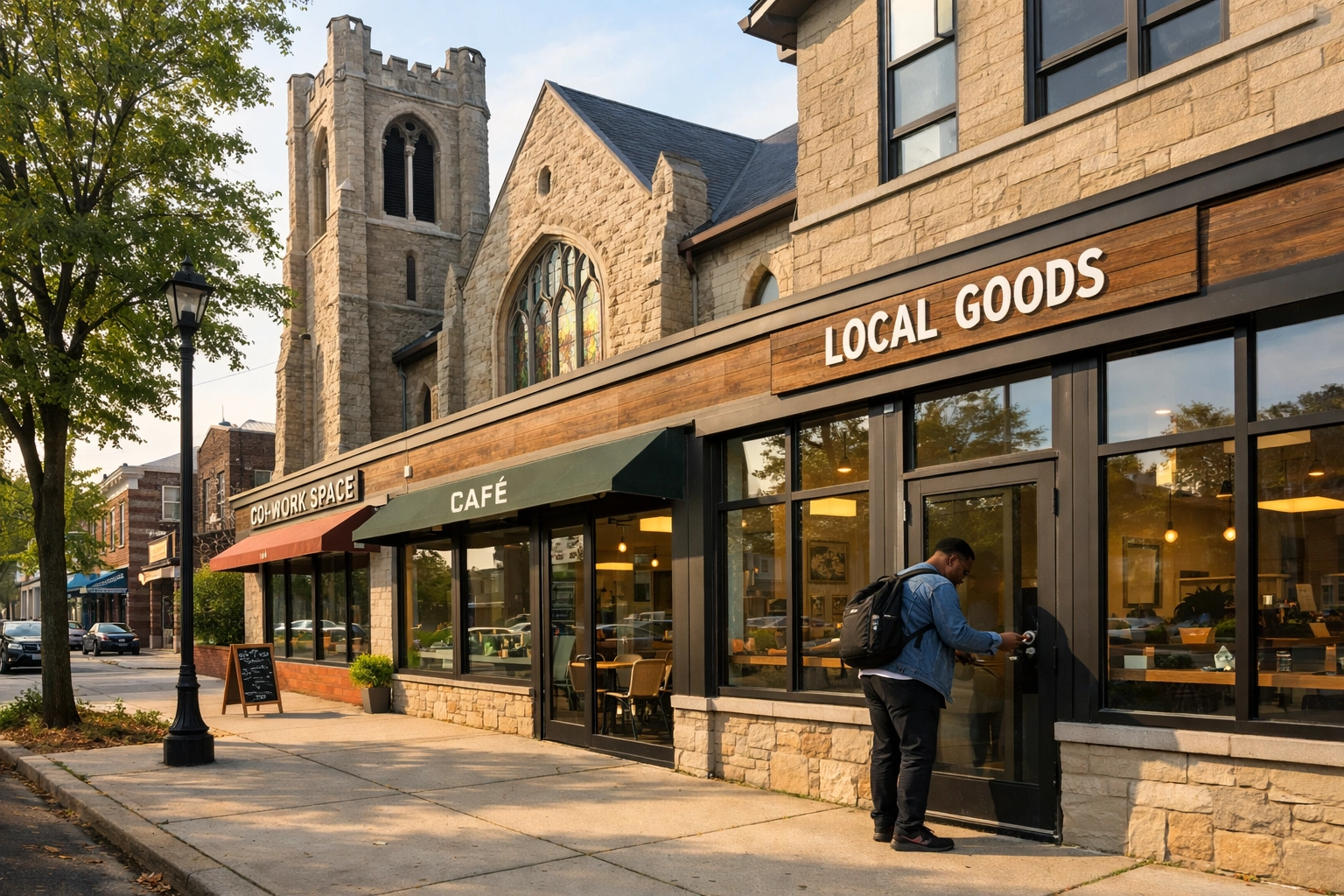
This isn't theoretical. When churches shift to faith based economic development through frameworks like GSC, they become catalysts for community wealth building. You're not just helping individuals anymore: you're strengthening the entire economic ecosystem.
Churches as Community Connectors
Research shows that community religiosity is one of the strongest predictors of economic mobility. Children from low-income families in religious communities have significantly higher chances of improving their economic standing as adults.
Why? Because churches provide something government programs and nonprofits often can't: organic, trust-based relationships.
Your church already serves as a bridge between residents and resources. You host community meetings. You connect recent immigrants with services. You reach people experiencing homelessness that institutional programs miss. With over 360,000 congregations across the United States, faith communities form a network that touches almost every neighborhood.
The GSC model amplifies that natural connector role. Instead of just linking people to existing resources, you help create new ones. Instead of sending congregants to businesses across town, you help them start businesses in the neighborhood.
Practical Steps for Church Leaders
So how do you actually start doing faith based economic development? Here's a roadmap that doesn't require a massive budget or special expertise:
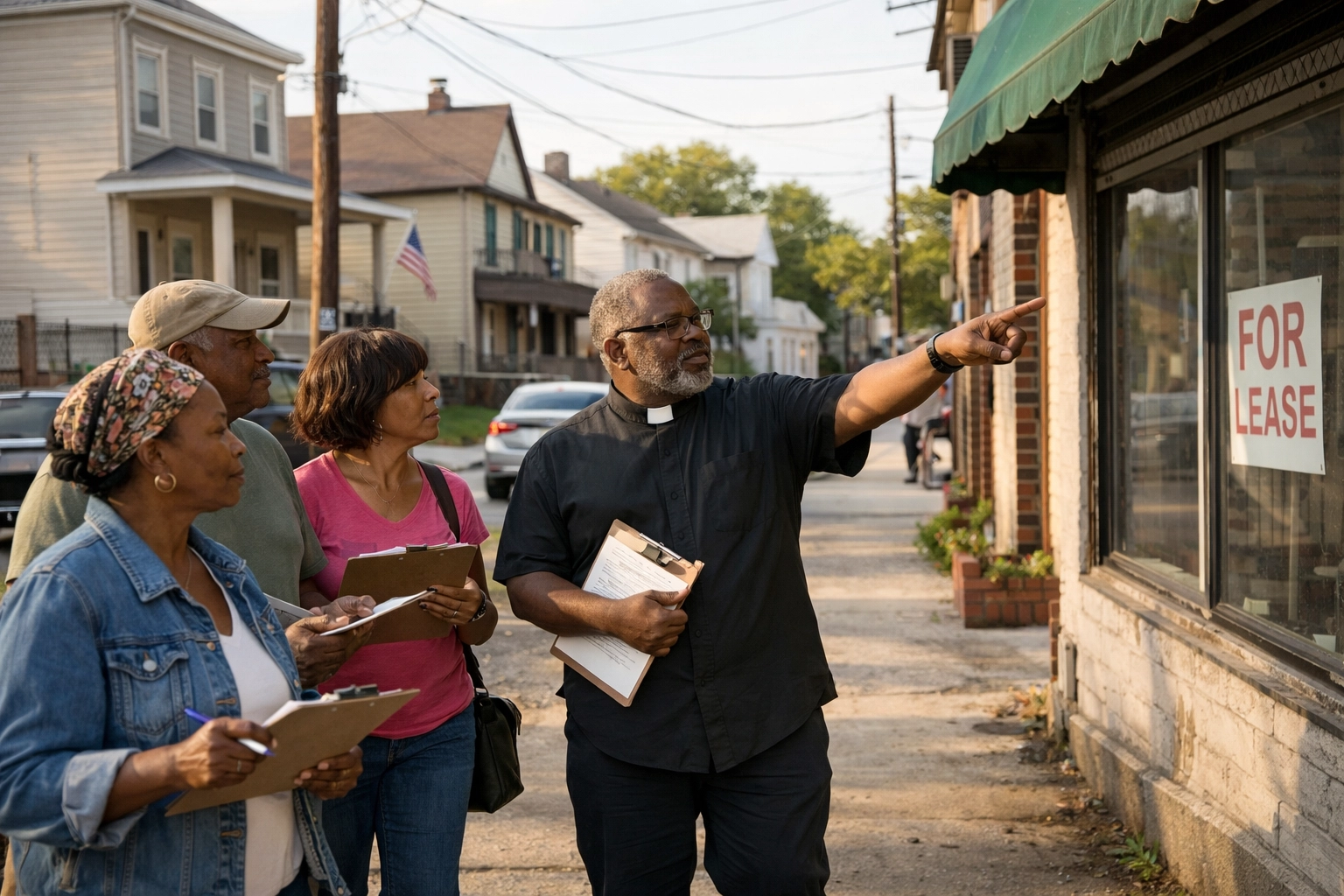
Start with Assessment: Walk your neighborhood with fresh eyes. What businesses are missing? Where do your congregants spend money? What skills exist in your congregation that aren't being used?
Identify Your Assets: Your building, your land, your networks, your credibility in the community: these are all economic development tools. List them out.
Build Partnerships: Connect with local business owners, community colleges, workforce development programs, and other churches. Faith based economic development works best when faith communities collaborate.
Create Pipelines, Not Just Programs: Instead of a one-time workshop, build a pathway from job training to actual employment with local businesses. Instead of a single business seminar, create an ongoing incubator with mentorship.
Measure What Matters: Track not just how many people you serve, but how many get jobs, start businesses, or build savings. Economic mobility is the metric that matters.
The Long Game
Faith based economic development isn't a quick fix. It's a long-term commitment to building community wealth that can sustain itself.
But here's what makes it worth it: when you help someone start a business that employs three people from the neighborhood, you've created a multiplier effect. Those three people spend locally. They mentor others. They become proof that economic mobility is possible.
When you rehabilitate a building and fill it with locally-owned businesses, you've created a community asset that will serve the neighborhood for decades.
When you shift from charity to sustainability, you're not just changing individual lives: you're changing the economic trajectory of your entire community.
Your Role in the Local Economy
You already have more economic power than you realize. Your church's annual budget, your purchasing decisions, your relationships, your real estate: these are economic development tools sitting in your hands right now.
The shift to faith based economic development doesn't mean abandoning your spiritual mission. It means recognizing that economic justice is part of that mission. That building community wealth is kingdom work. That your role as a church leader includes being a steward of your neighborhood's economic future.
The GSC model provides the framework, but you bring the relationships, the credibility, and the commitment. That combination is what transforms communities.
Ready to think differently about your church's economic role? Learn more about how The JAWS Group helps faith communities build sustainable economic development systems. Because your neighborhood doesn't just need another program. It needs a pipeline to prosperity: and you might be the one to build it.
