The Invisible Cost: Why Local Visibility Drives Trust
The Invisible Cost: Why Local Visibility Drives Trust
![[HERO] The Invisible Cost: Why Local Visibility Drives Trust](https://cdn.marblism.com/z416hD2F2tq.webp "[HERO] The Invisible Cost: Why Local Visibility Drives Trust")
Every week, someone in your community needs exactly what your church or organization offers. They're searching for help, for connection, for resources. But here's the problem: they can't find you. Not because you don't exist, but because you're invisible where it matters most: in the digital spaces where trust begins.
This invisibility isn't just inconvenient. It's expensive. And for faith-based organizations trying to serve their communities, it's creating a gap between the people who need help and the institutions ready to provide it.
The Real Cost of Being Unknown
When we talk about visibility, we're not talking about vanity metrics or social media likes. We're talking about whether the single mom searching for financial literacy classes at 11 PM can find your program. Whether the small business owner looking for local support discovers your church's business ministry. Whether neighbors even know you're there.

Recent data shows that local organizations lose an estimated $24,000 in annual revenue due to poor digital visibility. But for churches and community institutions, the cost isn't just financial: it's measured in lives unchanged, connections unmade, and community impact unrealized.
Think about it this way: if someone can't find you, they can't trust you. And if they can't trust you, they can't benefit from what you're offering. This is what we call the invisible cost: the compounding effect of missed opportunities that happen when your community presence doesn't match your community purpose.
Where Trust Actually Begins Today
Trust used to be built on handshakes and word-of-mouth alone. Your reputation spread through conversations at the grocery store and recommendations after Sunday service. That still matters, but something fundamental has shifted.
Today, trust begins with a search. Before anyone walks through your doors, they're looking you up online. They're checking reviews, reading about your programs, and comparing options. If what they find is outdated information, broken links, or worse: nothing at all: you've already lost them.
Here's a striking example: organizations with fewer than 10 online reviews convert just 2.8% of interested visitors into engaged participants. But those with 50 or more reviews? They convert at 7.3%. That difference represents over $20,000 in potential annual impact for a typical community organization.
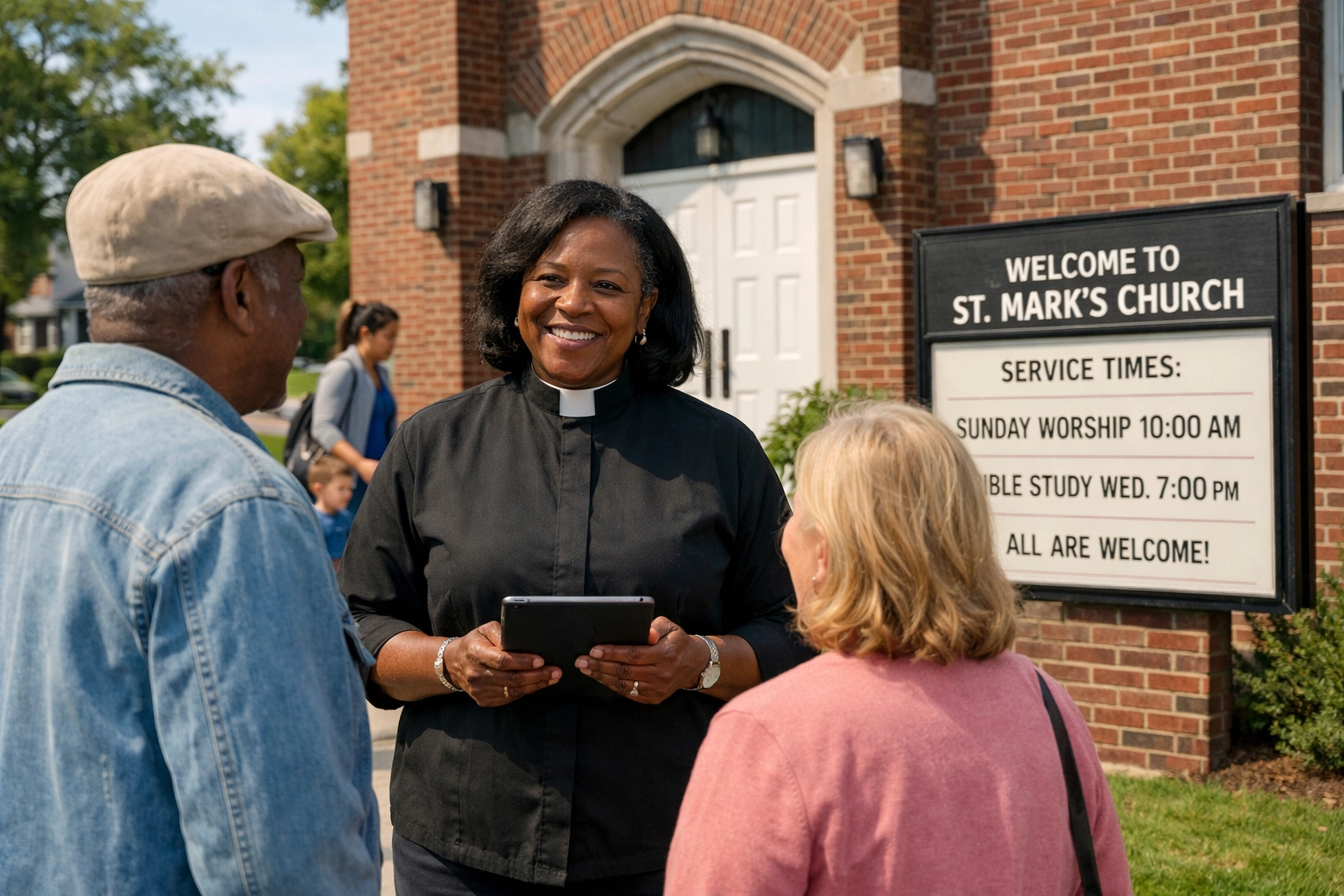
For a church running an economic development program, those numbers translate directly into families served. Every person who can't find accurate information about your services is potentially going somewhere else: or nowhere at all.
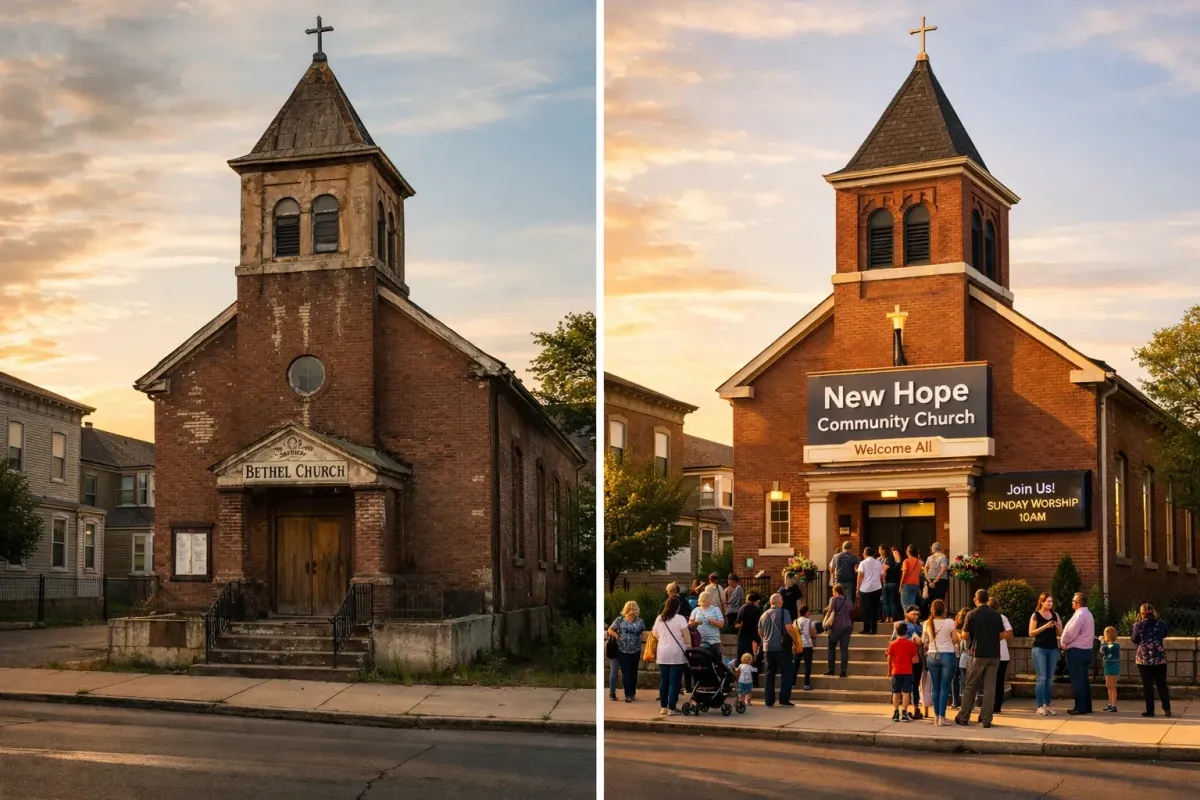
The Case Study: Two Churches, One Square Mile
Let me share a real scenario that plays out in communities everywhere. Two churches sit less than a mile apart in the same neighborhood. Both run food pantries. Both offer financial coaching. Both genuinely want to serve their communities.
Church A has been in the neighborhood for 40 years. Their congregation knows them well. But online? Their website hasn't been updated since 2018. Their Google listing shows incorrect hours. When you search "food assistance near me," they don't appear. Their Facebook page has three posts from last year.
Church B launched their community programs just five years ago. But they invested in building a strong community visibility strategy. They maintain accurate online listings, share regular updates through a mobile app, and make it easy for people to find their services when they need them.
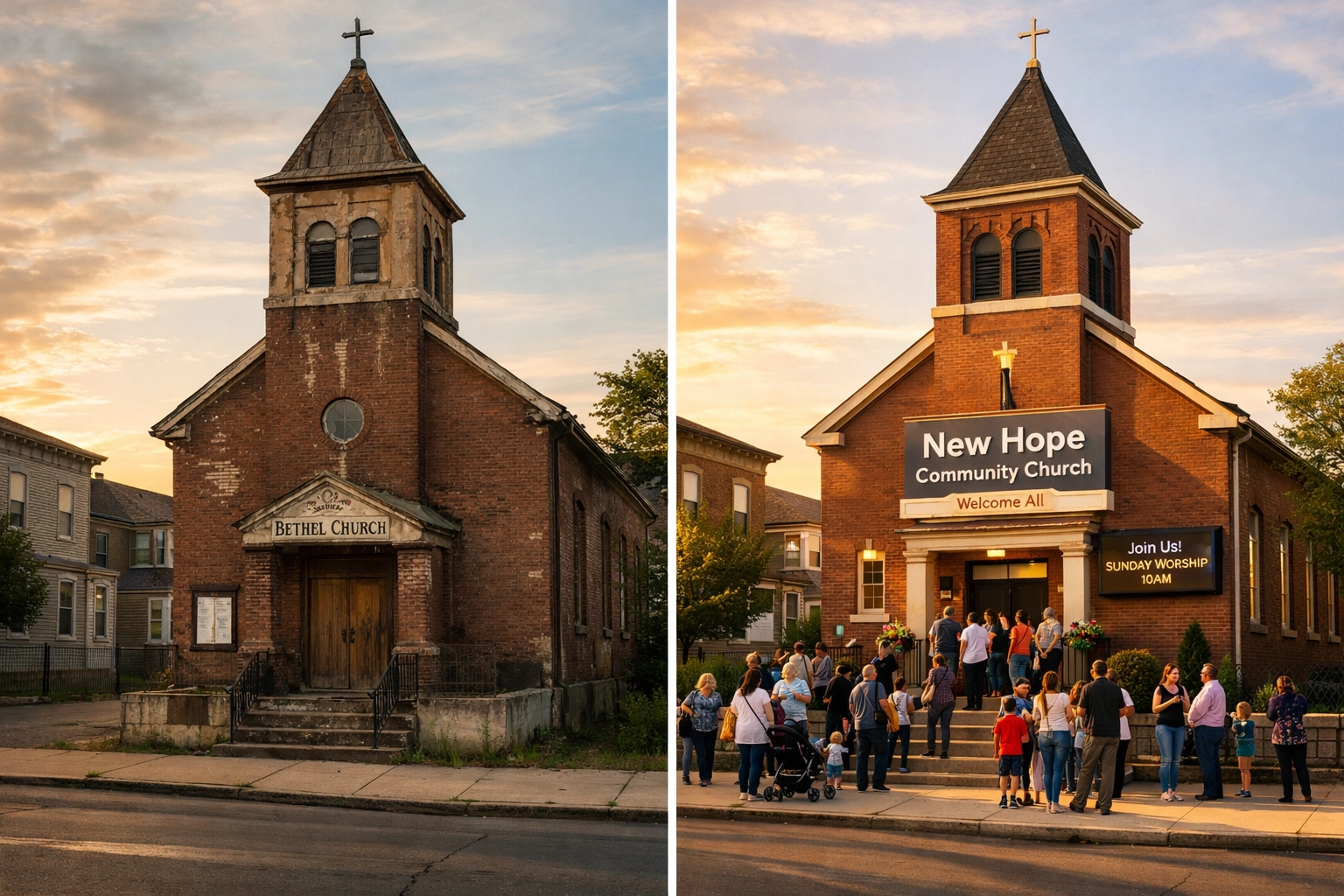
The result? Church B serves three times as many families, despite having a smaller congregation and shorter history. Why? Because when someone in crisis searches for help at 2 AM, Church B shows up. They're visible at the exact moment trust needs to begin.
This isn't about being flashy or tech-obsessed. It's about being findable when your community needs you most.
Building Trust Through Consistent Visibility
A community visibility strategy isn't complicated, but it does require intentionality. Here's what it actually looks like in practice:
Show up where people are looking. This means maintaining accurate information across search engines, maps, and community directories. When your hours change, update them everywhere. When you launch a new program, make sure people can find it.
Be consistent in your presence. Random posts every few months don't build trust: they create confusion. Regular, helpful updates show you're active, engaged, and reliable. This could be as simple as sharing program updates, community wins, or helpful resources on a weekly basis.
Make it easy to connect. People shouldn't have to guess how to reach you. Clear contact information, simple ways to get involved, and accessible communication channels remove barriers between need and help.
The churches and organizations that understand this aren't necessarily the ones with the biggest budgets. They're the ones who recognize that visibility and trust are directly connected in today's community landscape.
The Digital Bridge to Community Impact
This is where platforms like the GSC model and tools from The JAWS Group make a practical difference. A mobile app or digital platform isn't just technology: it's a bridge between your mission and the people who need it.
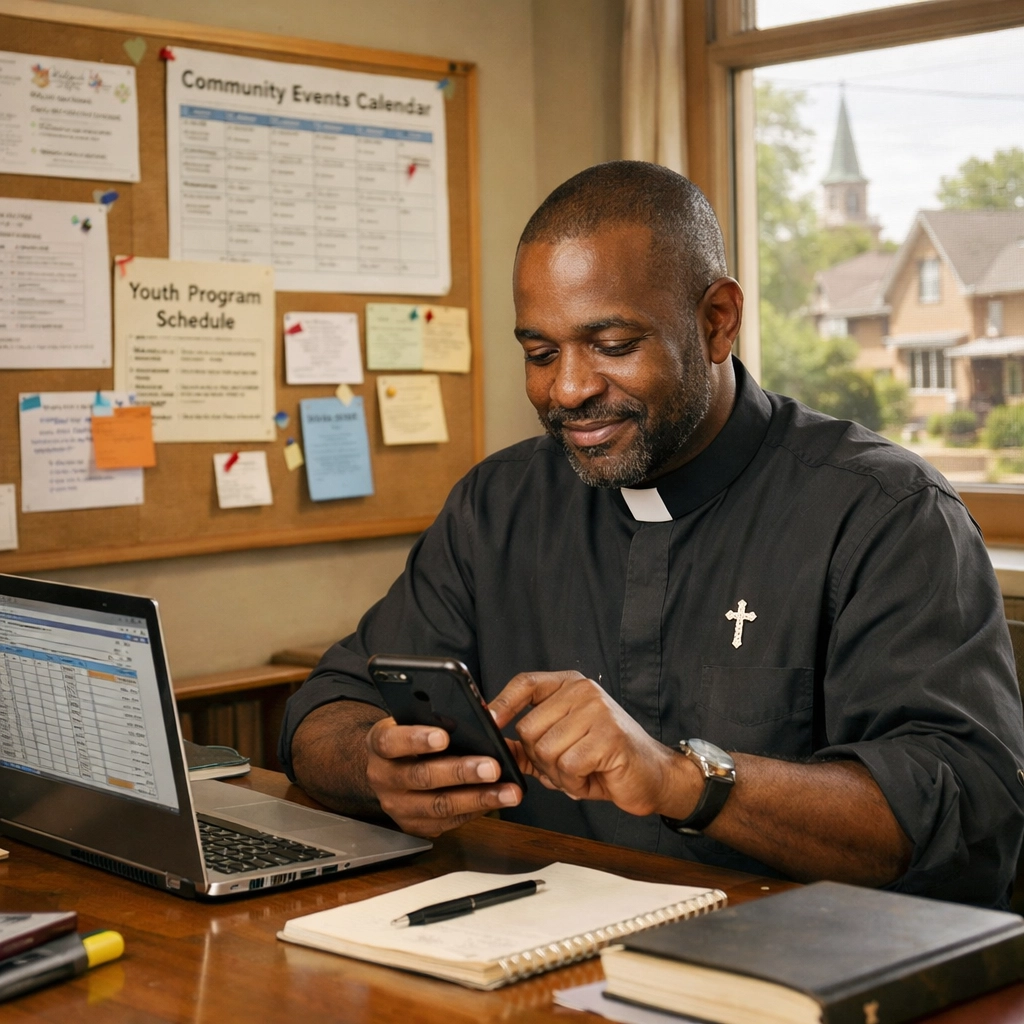
When a church uses a community-focused app, something important happens. Members can easily share resources with neighbors. Program information stays current and accessible. Connection points multiply beyond Sunday morning. The organization becomes visible not through expensive marketing, but through consistent, genuine presence.
These tools work because they align with how people actually search for and find help today. Someone needs financial literacy support, they search their phone. A business owner wants to connect with local resources, they look online first. Your visibility in these spaces determines whether you're part of that conversation or invisible to it.
From Invisible to Indispensable
Here's the truth: you can have the best programs, the most dedicated volunteers, and the biggest heart for your community. But if people can't find you, none of it matters as much as it could.
The invisible cost isn't just about lost opportunities: it's about the gap between your potential impact and your actual reach. Every person who doesn't know you exist is someone you can't serve. Every family that finds a less-equipped resource because they couldn't find you is a missed connection.
Building a community visibility strategy doesn't require a complete overhaul of how you operate. It starts with small, consistent steps: updating your information, sharing your story regularly, making it easy for people to find and trust you.
The organizations transforming their communities aren't necessarily doing anything revolutionary. They're just making sure they're visible in the moments that matter most. They're building trust through presence, consistency, and accessibility.
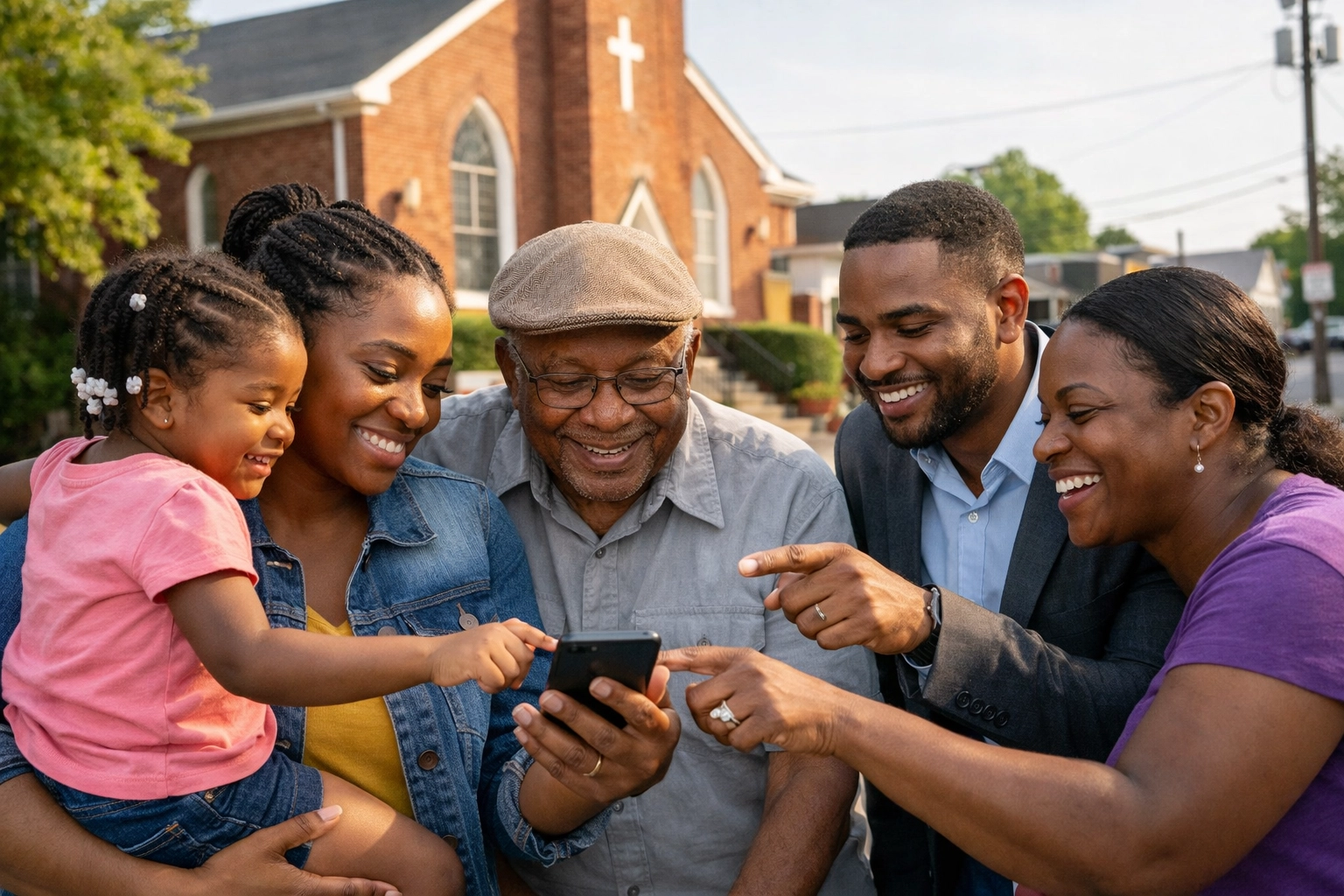
Your community is searching for what you offer. The question is: will they find you?
If you're ready to bridge the visibility gap and strengthen trust in your community, learn more about how we help organizations build lasting local impact. Because the most invisible cost isn't what you're losing( it's who you could be serving.)
