Stop Leaking Money: 7 Ways Churches Can Create a Closed-Loop Economy in Their Neighborhood
Stop Leaking Money: 7 Ways Churches Can Create a Closed-Loop Economy in Their Neighborhood
![[HERO] Stop Leaking Money: 7 Ways Churches Can Create a Closed-Loop Economy in Their Neighborhood](https://cdn.marblism.com/goquYL3VTd9.webp "[HERO] Stop Leaking Money: 7 Ways Churches Can Create a Closed-Loop Economy in Their Neighborhood")
Every Sunday, your congregation gathers. They worship, they fellowship, and then they scatter: taking their wallets with them to chain stores, distant suppliers, and online marketplaces that send wealth far beyond your neighborhood's borders.
What if there was a better way? What if your church could become the anchor for a closed-loop economy that keeps resources circulating right where they're needed most?
The truth is, most churches unknowingly participate in an economic exodus. Study after study shows that money spent outside the local community leaves and never returns. But when that same dollar circulates among neighbors, local businesses, and community institutions, it can multiply its impact three to five times over.
Here are seven practical ways your church can stop the leak and start building real wealth in your neighborhood.
1. Map Your Church's Spending Patterns
Before you can fix a leak, you need to know where it's happening. Take the next 30 days to audit where your church dollars are actually going. Document every vendor, supplier, and service provider your church uses: from office supplies to landscaping, from food for events to maintenance services.
You'll likely discover that 70-80% of your spending flows to businesses headquartered outside your community. That's normal, but it's also an opportunity. Create a simple spreadsheet tracking each expense category and the vendor's location. This becomes your roadmap for transformation.

The goal isn't perfection. Even shifting 20-30% of your spending to local providers can create substantial economic impact in your neighborhood. Digital tools make this easier than ever: use shared spreadsheets or church management software to track these patterns transparently.
2. Build a Local Vendor Network
Once you know where money is leaking, start building relationships with local alternatives. This is where your closed-loop economy begins to take shape.
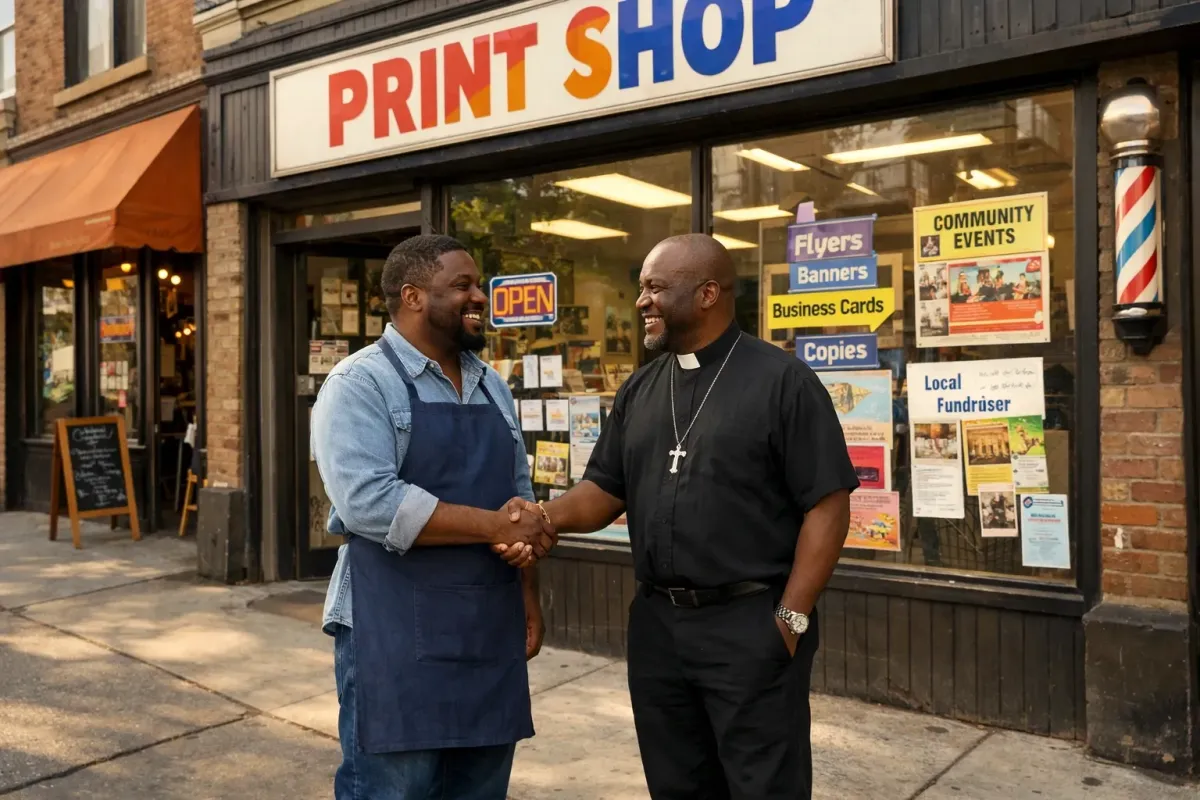
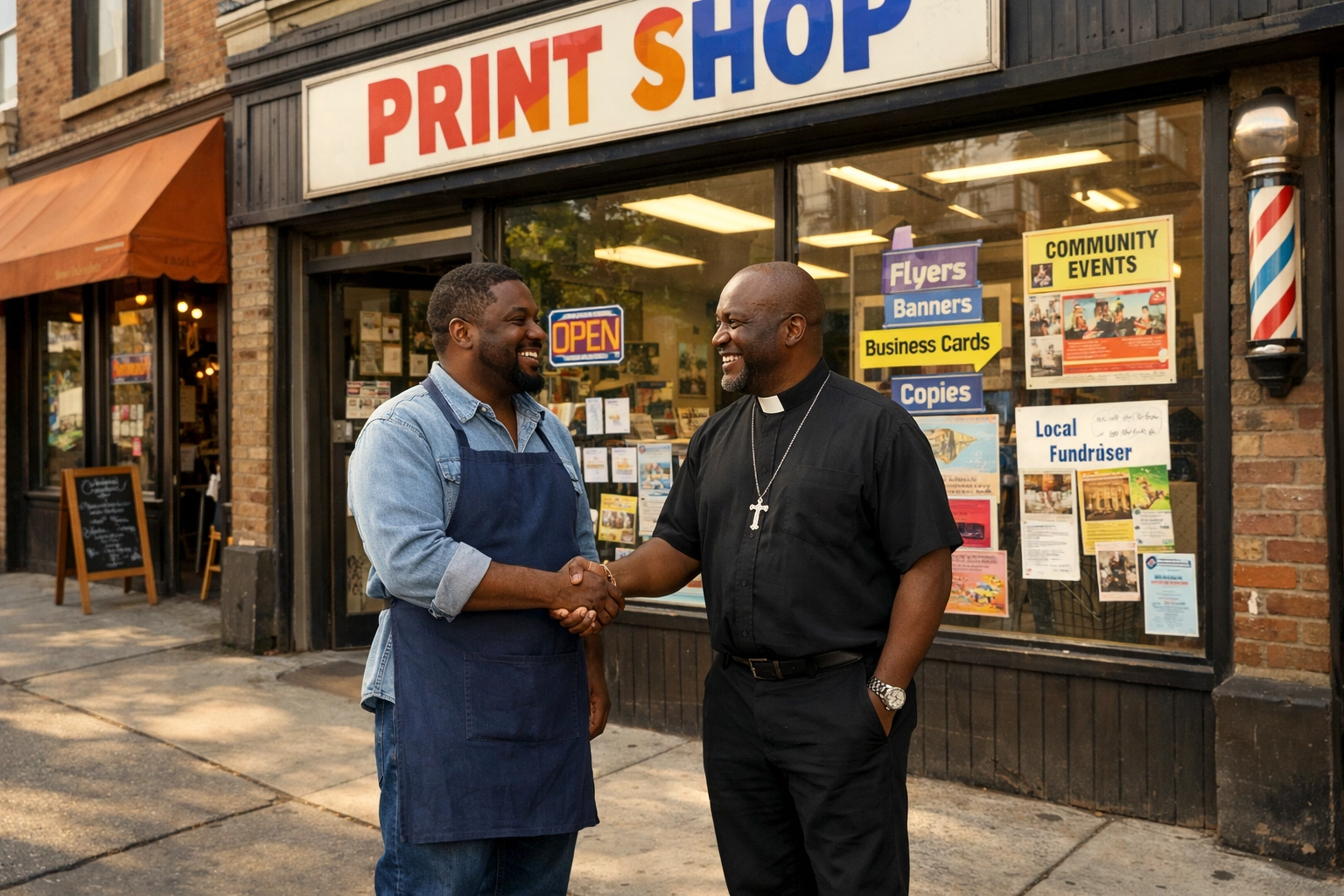
Start with the easiest switches. Does your neighborhood have a local printing shop instead of using a national chain? Is there a Black-owned catering business that could handle your next church event? What about office supplies from a locally-owned store rather than a big-box retailer?
Create a shared vendor directory that your church staff and ministry leaders can access. Better yet, make it available to your entire congregation. When church members need services, they can support the same businesses the church supports, multiplying the impact exponentially.
This isn't just about spending differently: it's about building relationships that strengthen the entire community fabric.
3. Launch a Church Member Business Directory
Your congregation is full of entrepreneurs, skilled professionals, and service providers. Many of them are struggling to find customers while church members unknowingly take their business elsewhere.
Create a digital directory of member-owned businesses and make it easily accessible. Use your website, church app, or even a simple Google document that people can search. Include business categories, contact information, and brief descriptions of services.
Promote this directory regularly: not as a sales pitch, but as a way to keep wealth circulating within your church family and broader community. When members support each other's businesses, money stays local and relationships deepen.
The beauty of a closed-loop economy is that it creates natural accountability and quality. When your plumber also sits in your pew, both parties have extra motivation to maintain excellence and integrity.
4. Establish Community Purchasing Cooperatives
There's power in collective buying. Work with other local churches and community organizations to form purchasing cooperatives for common needs.
Pool your resources for bulk purchases of everything from cleaning supplies to food for community events. Negotiate with local suppliers for better rates based on combined volume. This approach keeps money local while reducing costs for everyone involved.
Digital collaboration tools make this easier than ever. Create shared procurement calendars, coordinate orders through group messaging, and track savings through simple spreadsheets. The administrative burden is minimal, but the community impact is significant.
When five churches buy office paper together from a local supplier instead of ordering separately from an online giant, that supplier thrives and can hire more neighbors. That's how closed-loop economies build momentum.
5. Invest in Local Financial Institutions
Where does your church keep its money? If it's in a national megabank, those deposits likely fund projects and loans in distant cities: not in your neighborhood.
Consider moving church accounts to community development financial institutions (CDFIs), local credit unions, or community banks that prioritize lending in your area. These institutions reinvest deposits directly into local homes, businesses, and community projects.
This single decision can redirect tens or hundreds of thousands of dollars toward neighborhood revitalization. Your church's savings and operating accounts become tools for community wealth building, not just places to park money.
Research shows that local financial institutions lend a significantly higher percentage of their deposits within their communities compared to national chains. That means your church's money actively works to strengthen your neighborhood even while it sits in the bank.
6. Create Digital Community Marketplaces
Technology offers unprecedented opportunities to facilitate local exchange. Launch a digital marketplace where congregation members and neighbors can buy, sell, and trade goods and services.
This could be as simple as a Facebook group or as sophisticated as a custom platform. The key is creating an easy way for local economic exchange to happen. Members list services they offer, items they're selling, or resources they need. Others respond, negotiate, and transact: all within the community circle.

These marketplaces keep money circulating locally while building relationships. They also surface hidden resources and skills within your community. You might discover that the quiet sister in the third pew is an excellent graphic designer, or that the young father struggling financially has carpentry skills neighbors desperately need.
Digital tools make these connections visible and actionable. That's the infrastructure of a closed-loop economy in the 21st century.
7. Partner for Shared Infrastructure and Resources
The most overlooked opportunity for creating a closed-loop economy is sharing resources churches already own. Buildings sit empty most of the week. Vans and buses are parked. Kitchen equipment, sound systems, and meeting spaces remain idle.
Create sharing agreements with other local organizations. Rent your space to community businesses for meetings or events. Allow local entrepreneurs to use your commercial kitchen for their food businesses. Let your fellowship hall become a co-working space during the week.
Use digital booking systems to coordinate these shared resources smoothly. The income stays local, supports your church's mission, and strengthens other community organizations simultaneously. Everyone wins.
This approach transforms your church from a consumption center into a community asset that generates value all week long. Your building becomes infrastructure for neighborhood economic development.
Building Momentum Together
Creating a closed-loop economy isn't about perfection: it's about progress. Start with one or two of these strategies and build from there. Track your impact, celebrate small wins, and share stories of how keeping money local is transforming lives in your neighborhood.
The beautiful truth is that churches are uniquely positioned to lead this work. You already have the trust, the gathering space, the communication infrastructure, and the moral authority to invite your community into a different economic vision.
Every dollar that circulates locally instead of leaving creates jobs, builds relationships, and strengthens the social fabric that holds neighborhoods together. That's not just good economics: it's faithful stewardship.
Ready to stop the leak and start building wealth in your community? Our Square Mile provides digital tools designed to help faith communities coordinate, track, and amplify their local impact. Because when the church leads with both vision and practical systems, neighborhoods don't just survive( they thrive.)
