Stop Wasting Grant Money: How Faith Leaders Are Creating Self-Sustaining Community Systems
Stop Wasting Grant Money: How Faith Leaders Are Creating Self-Sustaining Community Systems
![[HERO] Stop Wasting Grant Money: How Faith Leaders Are Creating Self-Sustaining Community Systems](https://cdn.marblism.com/PRJ04YoppkG.webp "[HERO] Stop Wasting Grant Money: How Faith Leaders Are Creating Self-Sustaining Community Systems")
We’ve all seen it happen. A local church or community group lands a $50,000 grant to start a youth program or a community garden. There is a big celebration, a few ribbons are cut, and for twelve months, things look great. But then the grant cycle ends, the bank account hits zero, and the program quietly disappears.
This is the "Grant Cycle Trap." It’s a cycle of temporary fixes and long-term dependency that keeps our neighborhoods in a state of survival rather than growth. While grants are helpful for a jumpstart, they aren't the engine that drives lasting change.
Forward-thinking faith leaders are beginning to realize that if we want to change the trajectory of our neighborhoods, we have to stop acting like beggars and start acting like builders. We have to move away from being grant-dependent and start building self-sustaining community systems.
The Grant Cycle Trap vs. Sustainable Ownership
The problem with most grant funding is that it’s designed to address a symptom, not the root cause. It’s like putting a bandage on a deep wound. It helps for a moment, but it doesn’t heal the underlying issue. Most grants come with "strings" that dictate exactly how the money must be spent, often on things that don’t help the organization grow its own capacity.
When a faith-based organization relies solely on outside funding, it loses its power. If the funder decides to change their focus next year, your mission is suddenly in jeopardy. Sustainable ownership is the opposite. It’s about creating systems where the community generates its own wealth and reinvests it.
True faith-based economic programs don’t just ask for a seat at someone else’s table. They build their own table. By creating businesses, housing, and services that generate revenue, churches can fund their own outreach initiatives indefinitely. This is how we move from temporary relief to permanent community wealth building.
Asset-Based Community Development: Use What You Have
The Bible tells the story of a widow who was in debt and about to lose her sons to creditors. The prophet Elisha didn't give her a grant. He asked, "What do you have in your house?" She had a little oil. That "little" was the seed for her financial freedom.
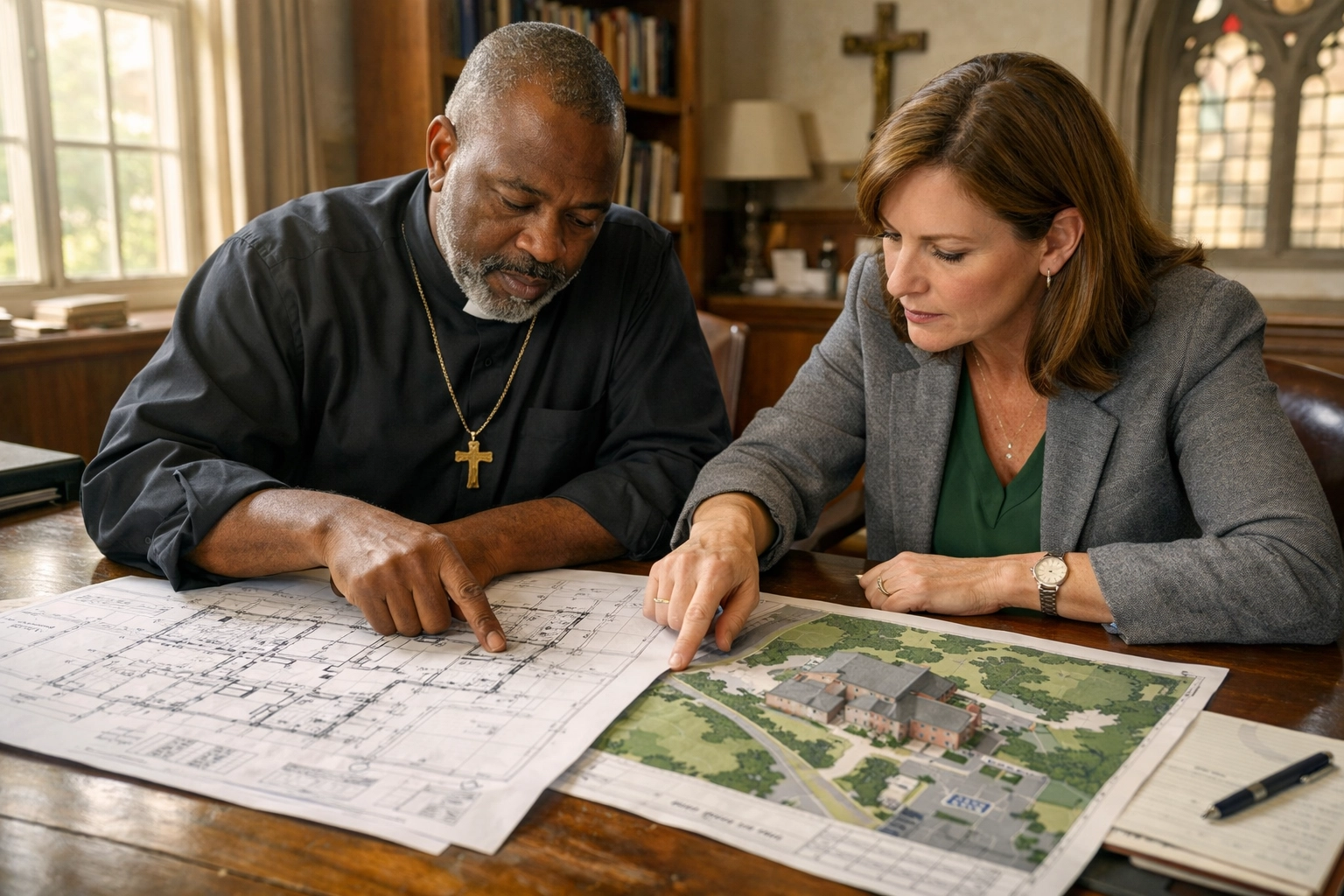
This is the core of Asset-Based Community Development (ABCD). Before looking for outside help, we look at the assets we already own. For many churches, those assets are massive. We have buildings that sit empty six days a week. We have land that is currently just a tax bill. We have a congregation full of professional skills and deep wisdom.
Transforming Church Land into Community Capital
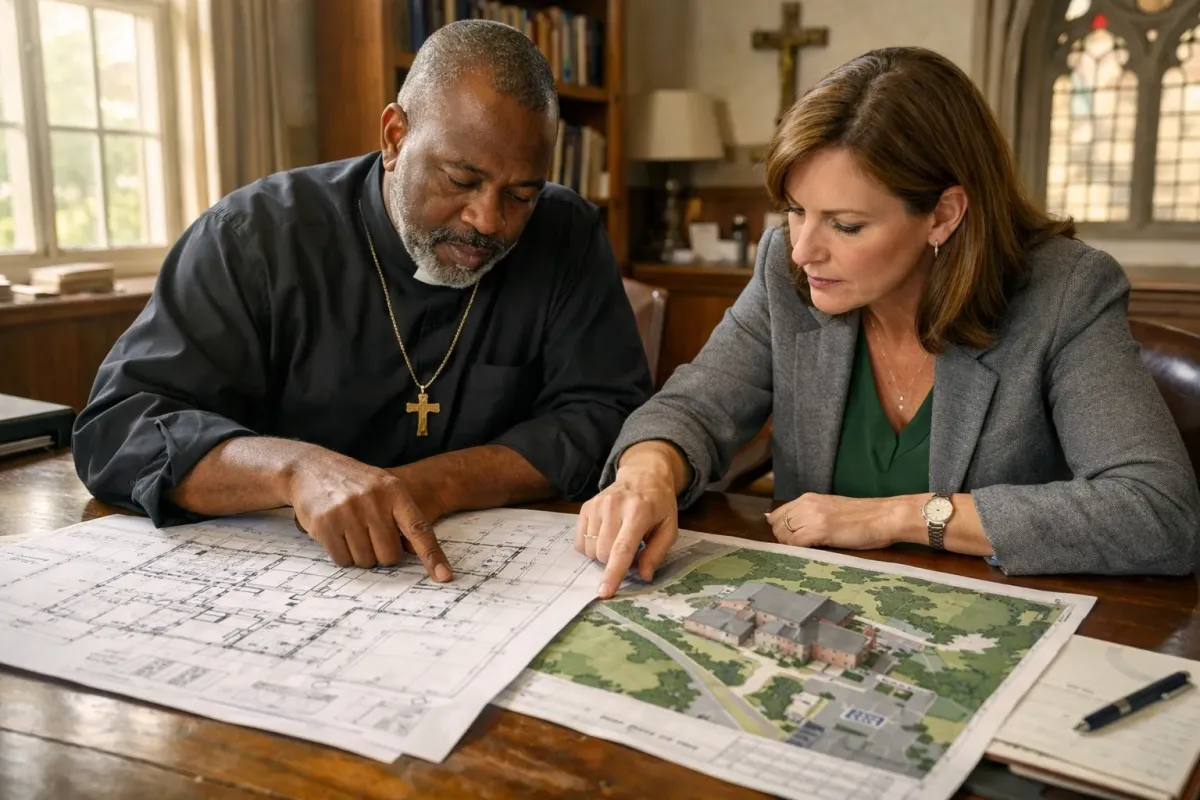
One of the most powerful faith-based outreach initiatives today involves turning underutilized church land into affordable housing or community hubs. Instead of waiting for a developer to come in and gentrify the neighborhood, churches are becoming the developers themselves.
By building affordable housing on church property, the faith community solves a housing crisis while creating a steady stream of rental income. That income can then be used to fund other church community impact programs like after-school care or job training. This is a perfect example of church-led community development in action.
Kitchens and Classrooms as Social Enterprises
Think about your church kitchen. Is it only used for Sunday coffee? That kitchen could be an incubator for local food entrepreneurs who need a licensed space to launch their catering business. Your classrooms could be used for a co-working space or a licensed daycare during the week.
When we view our buildings as tools for local economic reinvestment, we stop seeing them as expenses and start seeing them as engines for growth. This shift in mindset is the first step toward a closed-loop economy.
The Square Mile Model: Focus Your Impact
It’s easy to get overwhelmed by the big problems of the world. But you aren't called to fix the whole world at once; you’re called to be a light in your neighborhood. This is where the "Square Mile Model" comes in.
The Square Mile Model suggests that a faith leader should focus their economic energy on a specific, local radius: usually about a mile around the church. Instead of spreading resources thin across a whole city, you pour your energy into a concentrated area. This allows you to see real, tangible results in the Black community economic development of your immediate neighborhood.
Why the Square Mile Matters
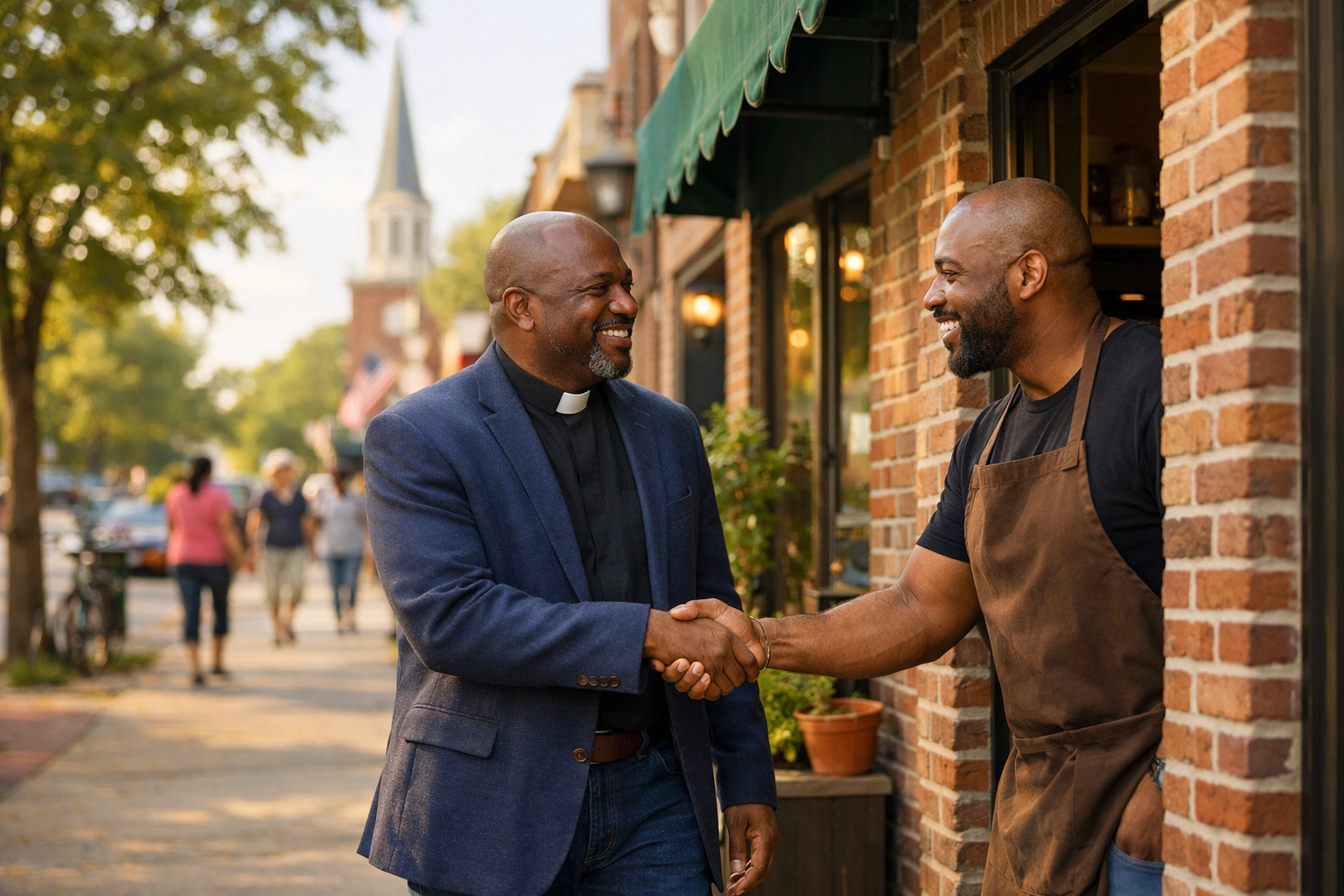
When you focus on a square mile, you can track every dollar. You can see which businesses are struggling and which families need support. You can build deep relationships with the local high school, the corner store owner, and the families on the block.
By focusing locally, you create a "density of impact." Your efforts start to overlap and reinforce one another. A housing project supports the local grocery store, which provides jobs for the youth in your mentoring program. This is how sustainable community economics actually works on the ground.
Building a Closed-Loop Economy
In many of our neighborhoods, a dollar leaves the community within six hours of being spent. It goes to a big-box store or a gas station owned by a corporation miles away. A closed-loop economy is a system where money stays in the neighborhood for as long as possible.
Think of it like a bucket. If the bucket has holes in the bottom, it doesn’t matter how much "grant water" you pour in; the bucket will always be empty. We have to plug the holes. We do this by encouraging local economic reinvestment.
How to Keep the Money Local
Faith leaders can lead the charge by making intentional choices about where the church spends its money. Does the church hire a local contractor for repairs? Does the church use a local bank or a credit union? Does the church promote local businesses to its members?
When we create a closed-loop economy, we are essentially "recycling" our community capital. One dollar spent at a local bakery pays the baker, who then buys a shirt from the local tailor, who then gives an offering at the local church. That single dollar has done the work of three dollars because it stayed in the neighborhood.
Transitioning to Social Enterprise
If you want to stop the "begging cycle," you have to start thinking like an entrepreneur. A social enterprise is a business created to solve a social problem while making a profit. For a church, the profit isn't for a CEO; it’s for the mission.
We are seeing faith leaders launch amazing things:
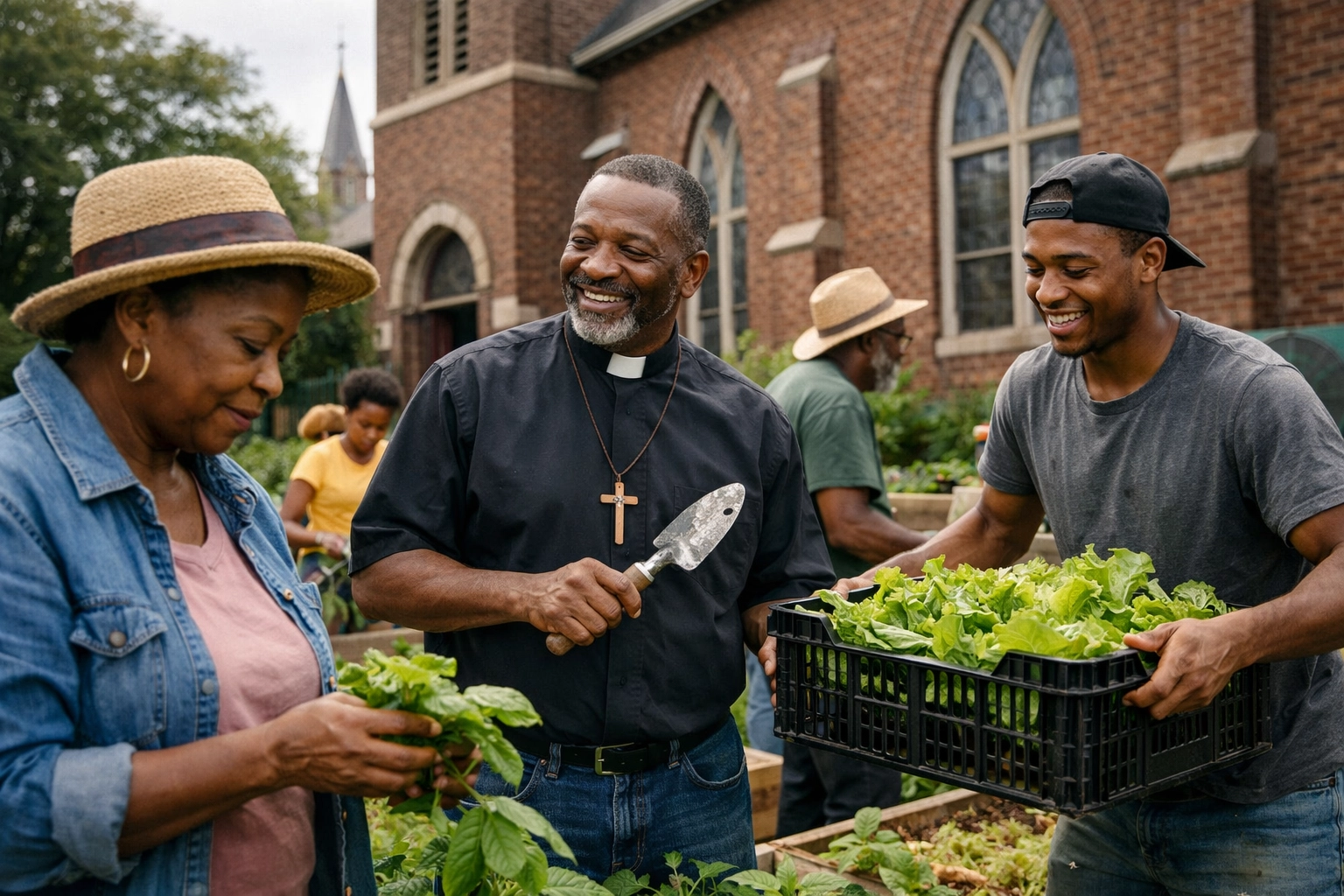
Food Security Networks: Not just giving out bags of food, but starting urban farms that sell produce to local restaurants and provide jobs.
Tech Hubs: Using church space to teach coding and digital skills to local teens, then hiring them to build websites for local businesses.
Property Management: Churches starting their own landscaping or maintenance companies to service their own buildings and those of their neighbors.
These aren't just "programs." They are businesses that provide real services, create real jobs, and generate real revenue that stays within the community.
Organizing the Complexity
Building a self-sustaining system is harder than just applying for a grant. It requires tracking data, managing properties, communicating with partners, and keeping your community engaged. It can feel like you need a whole IT department just to keep up.
This is where having the right digital tools makes all the difference. You don't need a massive tech team to organize a community wealth-building initiative. At The JAWS Group, we provide simple, effective tools: like CRMs and automation apps: that help faith leaders manage these moving parts. Whether you're tracking the impact of your Square Mile Model or managing a local food hub, our goal is to make the "business" side of ministry feel easy.
Final Thoughts: The Path to Legacy
Grants are a gift, but ownership is a legacy. As faith leaders, we are called to be good stewards of the resources we’ve been given. Stewardship isn't just about protecting what we have; it’s about making it grow.
By embracing Asset-Based Community Development, focusing on our Square Mile, and building closed-loop economies, we can create neighborhoods that flourish from the inside out. We can stop waiting for permission to thrive and start building the future our communities deserve.
It’s time to stop chasing the next grant and start building the next generation of community wealth. Your neighborhood is waiting. What do you have in your house?
